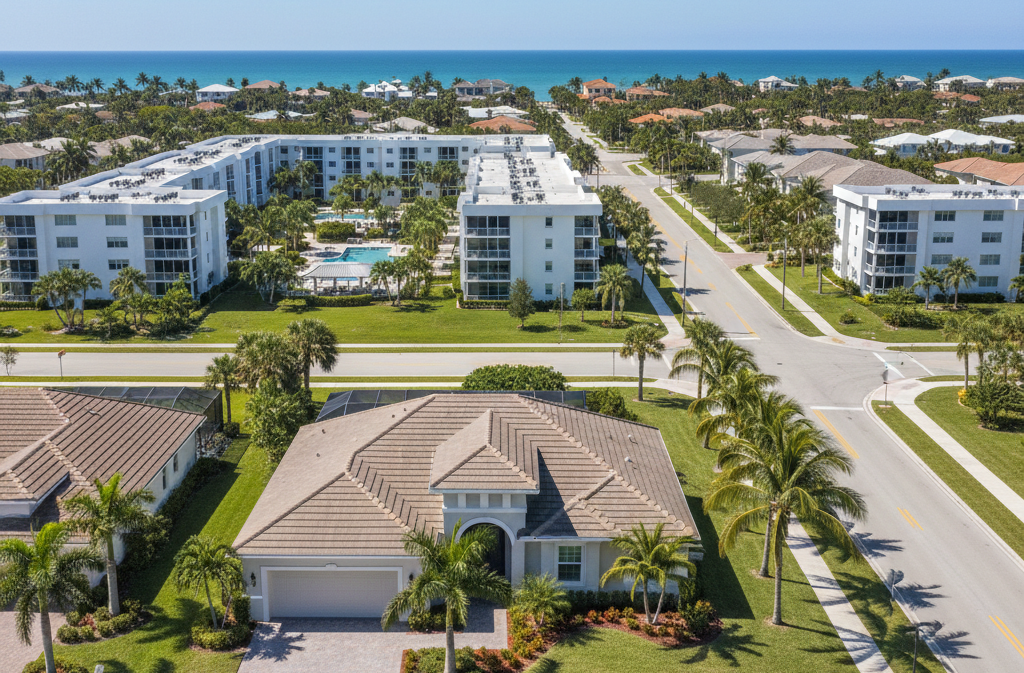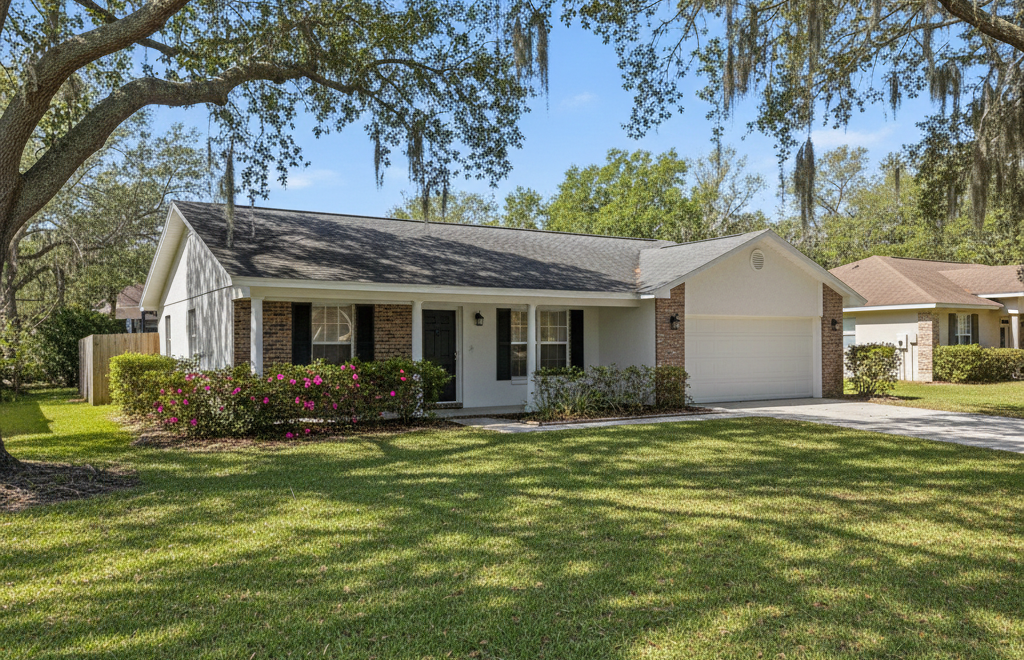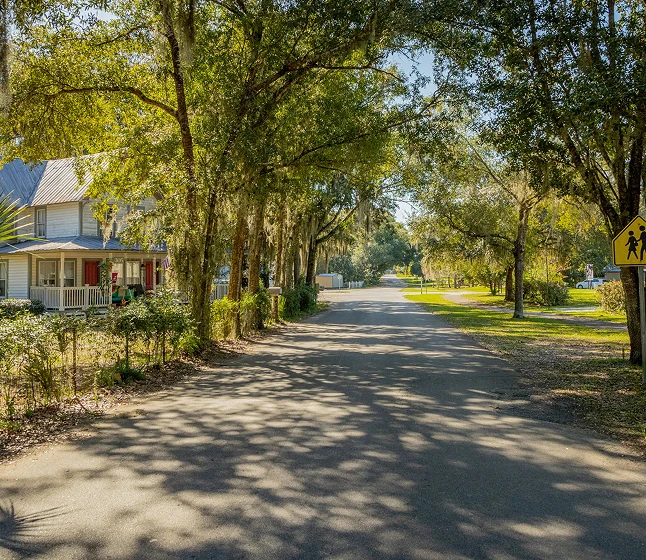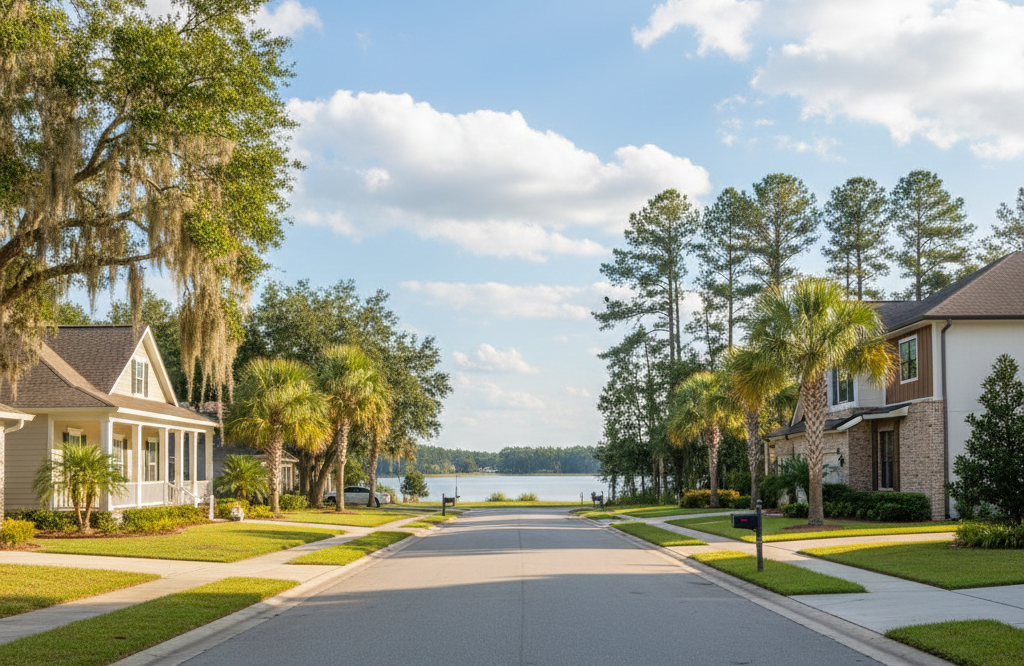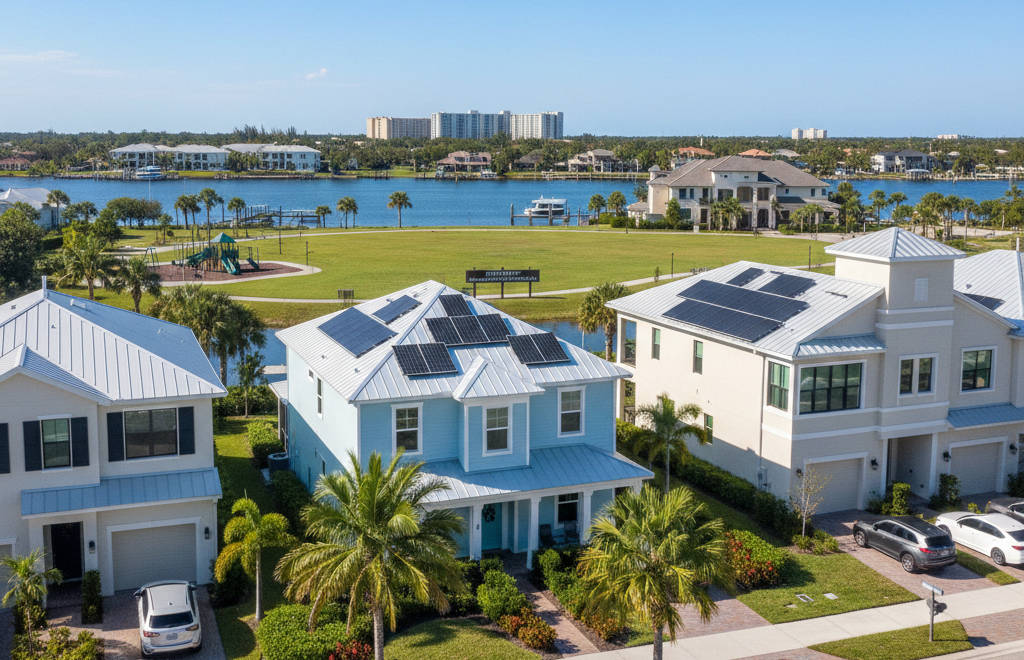


Before you fall in love with a listing, it helps to know the real number behind it. The income needed to buy a home in this market depends on more than the sticker price, it comes down to your down payment, your existing debt, and current mortgage rates. This guide walks through exactly how lenders calculate the income needed to buy a home in St. Johns County, using real price points from Nocatee, Ponte Vedra, and St. Augustine, so you can figure out where you actually stand before you start touring homes.
Current Median Home Prices in St. Johns County
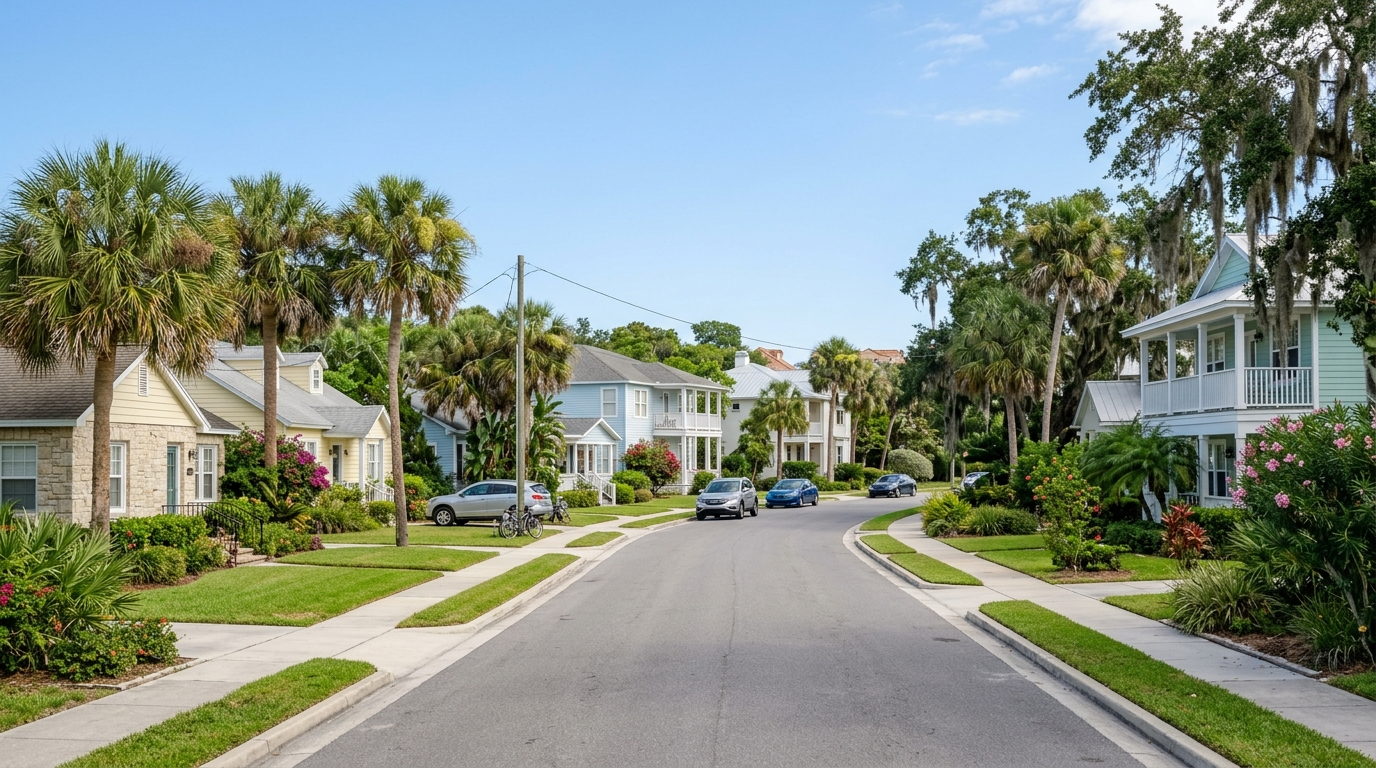
St. Johns County isn’t one single price point, and the income needed to buy a home here shifts quite a bit depending on which area you’re looking at.
- Nocatee: Median prices typically run $450,000–$600,000, with new construction making up a large share of inventory
- Ponte Vedra: Median prices often start around $650,000 and climb well past $1 million for oceanfront or golf-course properties
- St. Augustine: Median prices are generally more accessible, often $350,000–$500,000, with a mix of historic and newer homes
Because the price gap between these areas is so wide, the income needed to buy a home in Ponte Vedra looks very different from the income needed to buy a home in St. Augustine, even though both fall within the same county.
How Lenders Calculate the Income Needed to Buy a House in St. Johns County
Lenders don’t just look at price. They look at your income relative to your monthly debt, plus how much you’re putting down.
Debt-to-Income Ratio Basics
Most conventional lenders want your total monthly debt, including your future mortgage payment, to stay under 43% of your gross monthly income, though some programs allow more flexibility. This ratio is the single biggest factor in determining the income needed to buy a home, more than credit score in many cases.
For example, if your gross monthly income is $8,000, most lenders want your total debt payments, including the new mortgage, taxes, and insurance, to stay under roughly $3,400 a month.
Down Payment Scenarios (5%, 10%, 20%)
Your down payment directly changes the income needed to buy a home, since a bigger down payment lowers your monthly mortgage payment.
- 5% down: Higher monthly payment, plus private mortgage insurance (PMI) added to your monthly cost
- 10% down: Lower monthly payment than 5% down, PMI still applies but at a reduced rate
- 20% down: No PMI required, meaningfully lowering the income needed to buy a home at the same price point
Sample Income Breakdown by Price Point

Here’s a simplified look at the income needed to buy a home at different price points in St. Johns County, assuming a 10% down payment, current average mortgage rates, and typical property tax and insurance costs for the area.
| Home Price | Down Payment (10%) | Estimated Monthly Payment | Approx. Income Needed |
| $400,000 | $40,000 | ~$2,900 | ~$95,000/year |
| $550,000 | $55,000 | ~$3,950 | ~$130,000/year |
| $750,000 | $75,000 | ~$5,350 | ~$175,000/year |
| $1,000,000+ | $100,000+ | ~$7,100+ | ~$230,000+/year |
These numbers are estimates and will shift with mortgage rates, property tax rates, and your personal credit profile, but they give a realistic starting point for the income needed to buy a home at each price tier. It’s worth using these figures alongside today’s average mortgage rates, since even a half-point change can shift your qualifying income by thousands of dollars a year.
Costs Buyers Often Forget to Budget For
Beyond the mortgage payment itself, a few recurring costs catch first-time buyers off guard in St. Johns County:
- HOA fees, common in Nocatee and several Ponte Vedra communities, ranging from a few hundred to several thousand dollars a year
- Flood insurance, particularly for coastal properties near Ponte Vedra or St. Augustine
- Homeowners insurance premiums, which have risen across Florida and should be quoted before you finalize a budget, not after
Factoring these in early gives you a more honest monthly number, rather than a surprise a few months after closing.
Ways to Improve What You Qualify For
If the income needed to buy a home in your target neighborhood feels out of reach right now, a few adjustments can move the needle:
- Pay down existing debt to lower your debt-to-income ratio before applying
- Increase your down payment even by 5% to reduce PMI and monthly payment
- Get pre-approved early so you know your real number instead of guessing
- Consider a slightly lower price tier, like St. Augustine instead of Ponte Vedra, if your qualifying income doesn’t stretch that far yet
- Add a co-borrower, such as a spouse or partner, to combine incomes and qualify for more
Once you have a realistic number in mind, you can browse current St. Johns County listings in your range and see what’s actually available at your price point, rather than working off guesswork.
Comparing Areas Within Your Budget
If you’re not sure which part of St. Johns County fits your numbers, it helps to filter listings by your exact budget rather than searching by neighborhood name first. This usually surfaces options you hadn’t considered, including newer sections of Nocatee or more affordable pockets near St. Augustine that still check most of your boxes.
Final Thoughts
Figuring out the income needed to buy a home isn’t just about the list price, it’s about your debt, your down payment, and current rates working together. St. Johns County offers a wide enough price range that most buyers can find a realistic entry point, whether that’s a starter home near St. Augustine or a larger property in Nocatee. The key is running your actual numbers before you start touring homes, so you’re not falling for a listing that’s out of reach.
If you want a second opinion on where your numbers actually land, it’s worth taking a few minutes to talk to a local agent about your specific numbers before committing to a search radius or price range. And before you lock in a budget, remember to factor in closing costs before you set your budget, since those add several thousand dollars on top of your down payment.