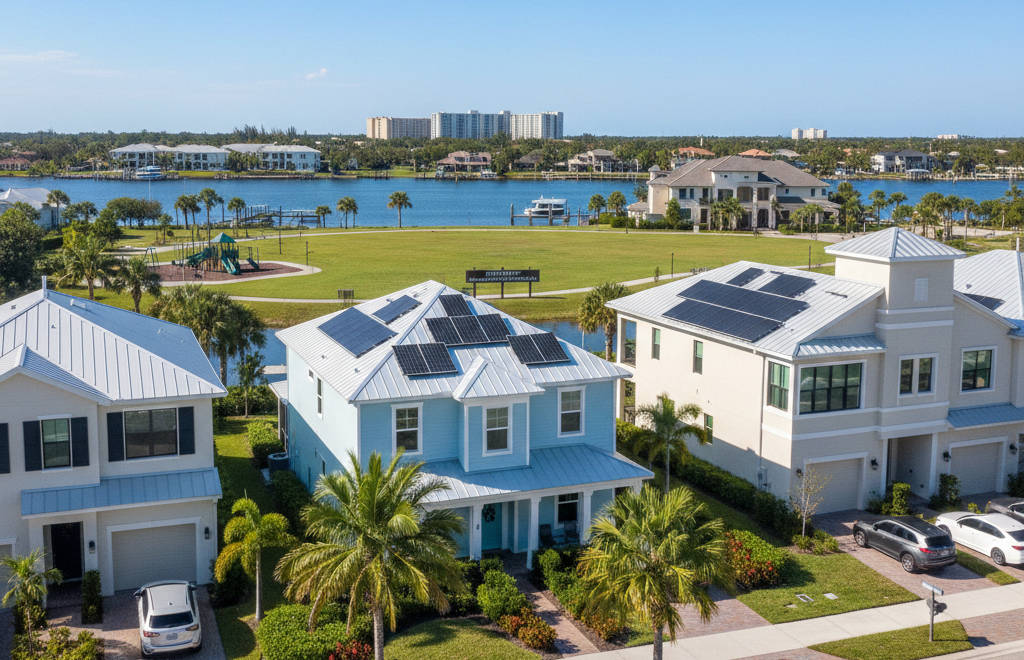


Buying a home in Florida in 2026 looks different than it did even two years ago. Inventory has shifted, insurance costs have climbed, and the gap between well-prepared buyers and unprepared ones shows up clearly in who gets accepted offers and who keeps losing out. Florida is still one of the most active real estate markets in the country, drawing buyers from across the United States who want no state income tax, year-round sunshine, and housing prices that remain competitive with most coastal markets. But buying a home in Florida requires specific If you’re focusing on Northeast Florida specifically, the North Florida real estate market overview gives you the regional context before you dive into the steps below. Most buyers calculate their mortgage payment and stop there. That’s the most common and most expensive mistake in the Florida home buying process. The real monthly cost of owning a Florida home includes several line items that don’t exist in many other states.
 Buying a home in Florida in a competitive market without a pre-approval letter is how buyers lose homes they actually wanted to properties they never competed against. Pre-approval is not the same as pre-qualification. Pre-qualification is a general estimate based on self-reported information.
Step 1: Understand What Buying a Home in Florida Actually Costs
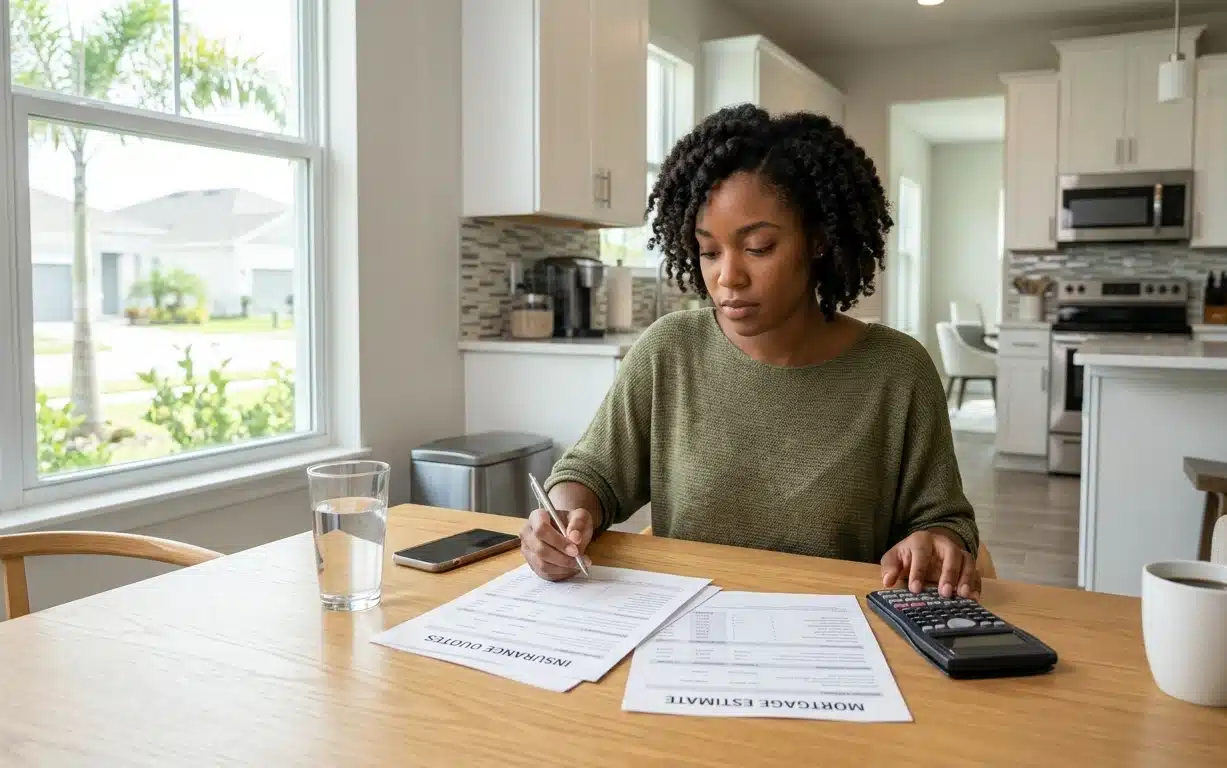 Most buyers calculate their mortgage payment and stop there. That’s the most common and most expensive mistake in the Florida home buying process. The real monthly cost of owning a Florida home includes several line items that don’t exist in many other states.
The Full Monthly Cost Picture
Homeowner’s insurance in Florida has risen sharply over the past several years. Several major carriers have exited the state, and premiums for standard homes now run between $2,000 and $5,000 or more per year depending on location, construction type, and proximity to flood zones. Flood insurance is separate and adds $700 to $3,000 or more annually for properties in FEMA-designated flood zones. Property taxes in Florida are softened by the homestead exemption for primary residences, but annual tax bills still represent a meaningful monthly cost depending on the county and assessed value. HOA fees apply to many Florida communities and range from under $100 to over $500 per month depending on the community and amenities included. Understanding the monthly cost of owning a home in Florida before you decide on a purchase price range saves you from budgeting for a mortgage payment you can afford while missing the full monthly picture that makes the home unaffordable in practice.Step 2: Choose the Right Florida Market for Your Budget and Lifestyle
Buying a home in Florida without deciding where first is like shopping for shoes without knowing your size. Florida has dozens of distinct real estate markets that differ dramatically in price, lifestyle, school quality, employment access, and community character.How to Narrow Down Your Target Market
Start with these questions before you open a single listing website. Where will you work, or are you fully remote? What school district matters to you if you have children? Do you need beach access, river access, or neither? What is your realistic monthly budget including all ownership costs? Answering these questions first narrows your geographic options from dozens of Florida markets to a manageable shortlist. For buyers focused on Northeast Florida, reviewing the best cities to live in North Florida gives you a structured comparison of communities across Putnam, Clay, St. Johns, and Alachua counties before you commit to a specific area.What to Know About Florida’s Regional Price Differences
Florida’s price variation by region is significant. Miami-Dade, Broward, and Palm Beach counties run median home prices well above $500,000. Tampa Bay and Orlando metros sit in the $350,000 to $450,000 range. Northeast Florida offers some of the most accessible price points in the state, with markets like Putnam County delivering waterfront living starting around $150,000 and suburban communities in Clay County ranging from $250,000 to $500,000. Knowing which tier you’re buying in sets your offer strategy, financing approach, and timeline expectations appropriately from the start.Step 3: Get Pre-Approved Before You Look at a Single Listing
 Buying a home in Florida in a competitive market without a pre-approval letter is how buyers lose homes they actually wanted to properties they never competed against. Pre-approval is not the same as pre-qualification. Pre-qualification is a general estimate based on self-reported information.