

If you’ve been browsing homes in Florida long enough, you’ve noticed that monthly HOA fees show up in listings the way fine print shows up on a contract. Easy to overlook, but expensive to ignore. HOA fees in Florida are one of the most misunderstood parts of the home-buying process, and they catch buyers off guard more often than almost any other cost.
When you compare homes, you can search current North Florida homes for sale and check whether each one has an HOA before you fall for it.
I’m Kassidy Babcock, a full-time Northeast Florida realtor with Timber To Tides Realty. I work with buyers across Putnam, Clay, St. Johns, and Alachua counties, and I’ve watched HOA dues quietly reshape someone’s budget dozens of times. This guide covers everything you actually need to know before you make an offer on any HOA-governed property.
What Are HOA Fees in Florida and How Are They Set
A homeowners association is a private organization that governs a neighborhood or development. When you purchase a home inside one, you agree to follow its rules and pay its dues. But here’s what a lot of buyers don’t realize: HOA fees in Florida aren’t set by the government or the developer. They’re set by an elected board of homeowners, which means they vary significantly from community to community and can change year over year.
Who Controls the HOA Budget
The board of directors controls the annual operating budget, and that budget determines how much each homeowner pays. Board members are elected by residents, and they meet regularly to review expenses, approve contracts, and vote on budget adjustments. Because HOA fees in Florida are managed this way, there’s no single number that applies across the state. The community’s amenities, size, age of the development, and local cost environment all influence the final figure.
How Fees Change Year to Year
Your dues can go up every year. Florida law allows HOA boards to raise fees up to 115% of the prior year’s approved budget without a member vote. That means a $300-per-month fee today could become $345 next year without you having any formal say. Boards typically justify increases by pointing to rising insurance costs, landscaping contracts, or vendor rate changes. Always ask for a three-year history of dues increases before committing to any HOA property.
Average HOA Fees in Florida by Community Type (2026)
HOA fees in Florida span a much wider range than most buyers expect. Before you look at any specific number, it helps to understand what’s typical for the type of community you’re considering. And before you factor dues into your budget, look at the total monthly cost of owning a home in Putnam County so you understand how fees fit alongside your mortgage, insurance, and taxes.
Single-Family Planned Communities
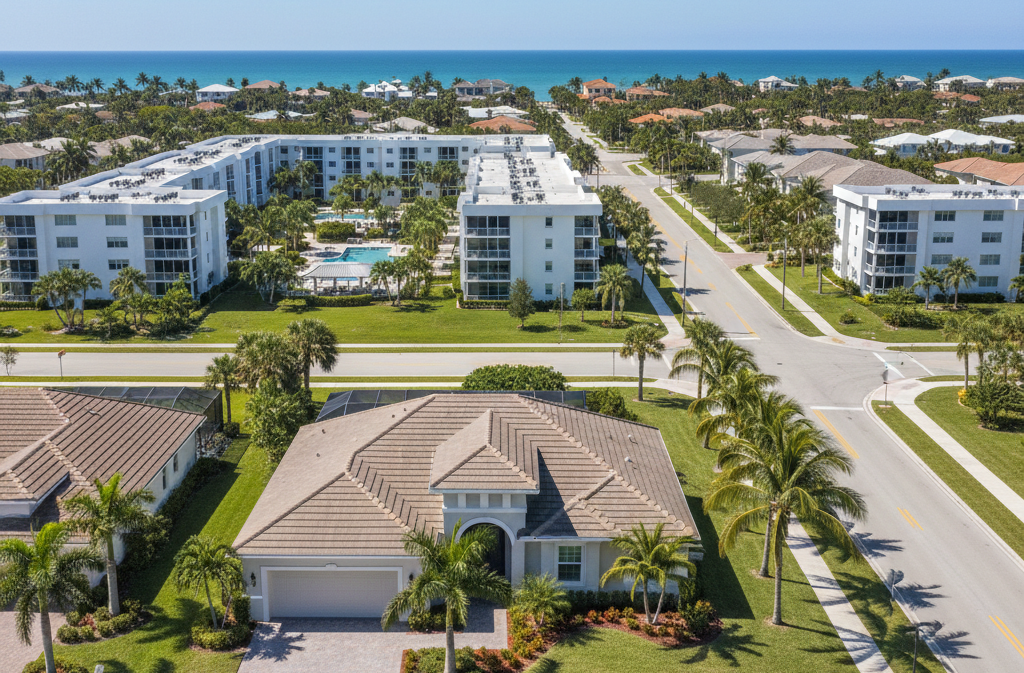
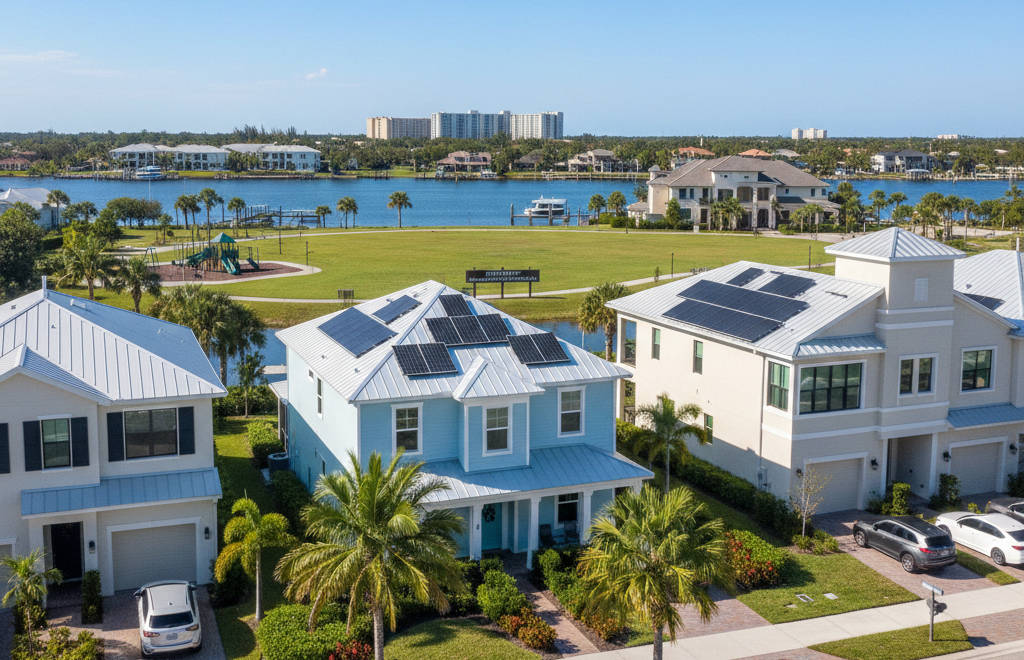
Single-family homes in planned communities with shared amenities typically carry HOA fees between $100 and $450 per month in Florida. The more amenities the community offers, like gated entrances, resort pools, fitness centers, and walking trails, the higher the dues tend to run. A home with a lower purchase price in a higher-HOA community can easily cost more per month than a comparable non-HOA home nearby.
Condos and Townhomes
Condos carry the highest HOA fees in Florida because the association is responsible for the exterior, roof, elevators, and all common spaces of the entire building. Monthly fees for Florida condos typically range from $300 to $900, with high-rise coastal properties sometimes running past $1,200. Many condo associations also include water, trash, and sometimes cable in the dues, which changes the comparison to a single-family home significantly.
What HOA Fees in Florida Actually Cover
Two communities can charge the same monthly rate and include completely different things. Knowing what you’re paying for is just as important as knowing the number.
Amenities vs. Maintenance: What You’re Really Paying For
Most HOA fees in Florida cover common area landscaping and upkeep, shared amenity maintenance, reserve fund contributions, and property management fees. Some communities bundle in exterior pest control, community cable, or even water and sewer. The more services included, the higher the dues, but that isn’t always a worse deal once you price those services individually.
What HOAs Never Cover (and Surprises Buyers Miss)
Your HOA dues don’t cover your personal homeowner’s insurance, your property taxes, interior repairs, or your individual utility bills. Some buyers assume the HOA handles more than it does and then feel blindsided when their first insurance bill arrives. Always confirm in writing exactly what’s included in the dues before making any budget assumptions.
HOA Fees by County: What I See Across My Markets
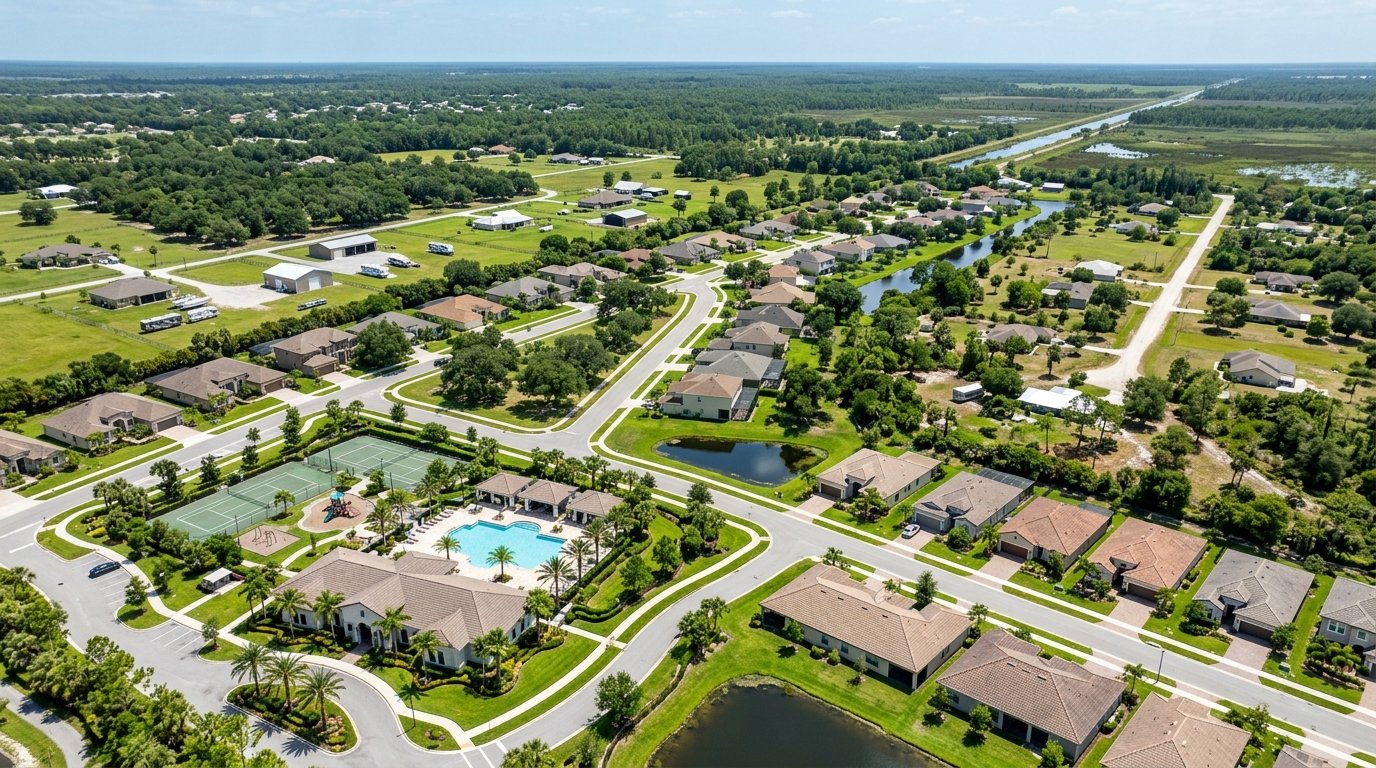
This is information you won’t get from a generic Florida finance blog. Working across four counties gives me a clear picture of where HOA-heavy communities are concentrated and where buyers still have genuine alternatives.
St. Johns County: Highest HOA Saturation in the Region
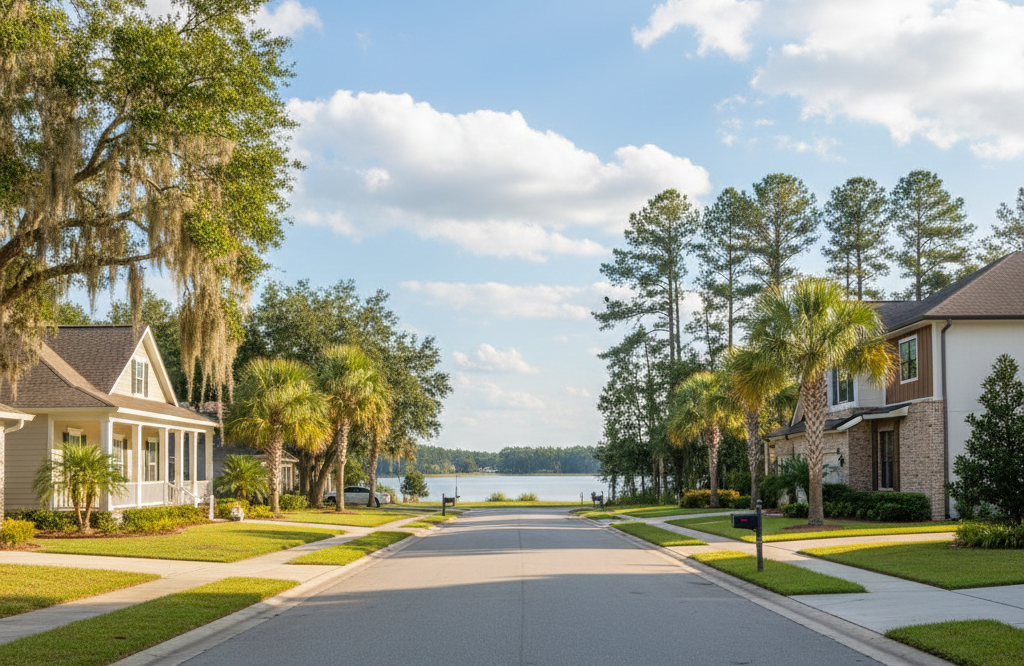
Most of the new construction and master-planned communities in St. Johns County come with HOA governance. If you’re browsing homes for sale in St. Johns County, expect to see dues ranging from $150 to $600+ in communities like Nocatee, Silverleaf, and Beachwalk. The tradeoff is that these communities are consistently well-maintained, which supports long-term resale value.
Clay County: Mixed HOA and Non-HOA Options
Clay County offers genuine variety. Older neighborhoods in Orange Park and Green Cove Springs often have no HOA whatsoever. Newer developments in Fleming Island and Oakleaf Plantation do. Buyers looking for Clay County homes with no HOA can find them if they know what to search for, and the market here gives you real options on both sides.
Putnam County: Largely HOA-Free, Here’s What That Means
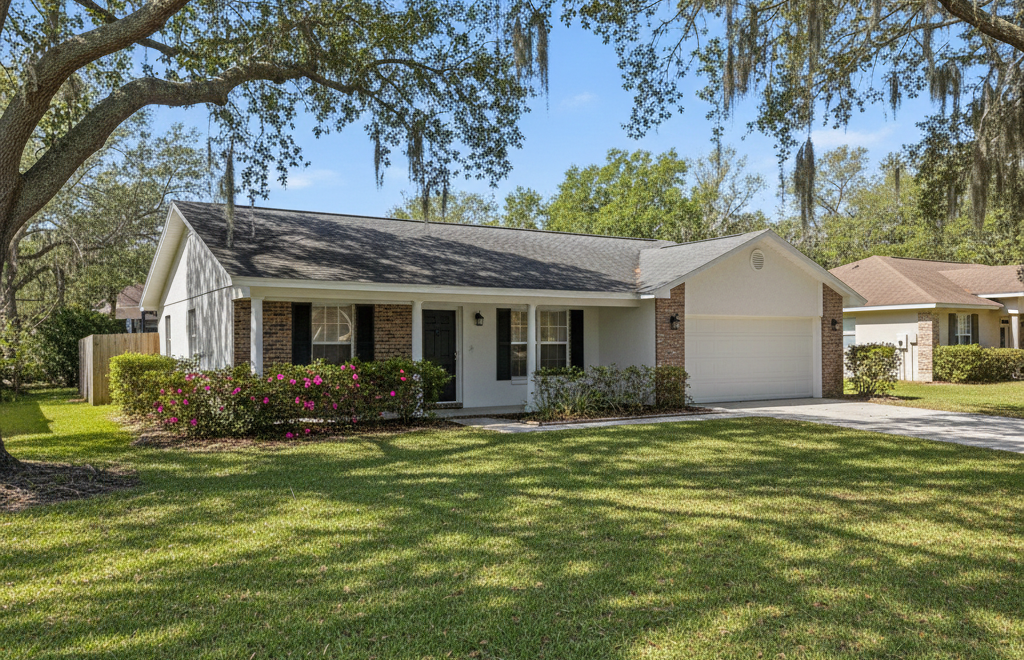
Most single-family homes and rural properties in Putnam County carry no HOA at all. No monthly dues, no approval required for your fence color, no restrictions on where you park your boat or camper. For buyers working with a tight monthly budget, this is a real financial advantage. It’s one of the reasons buyers who’ve been priced out of HOA-heavy markets consistently rediscover this area.
How to Evaluate an HOA Before You Buy
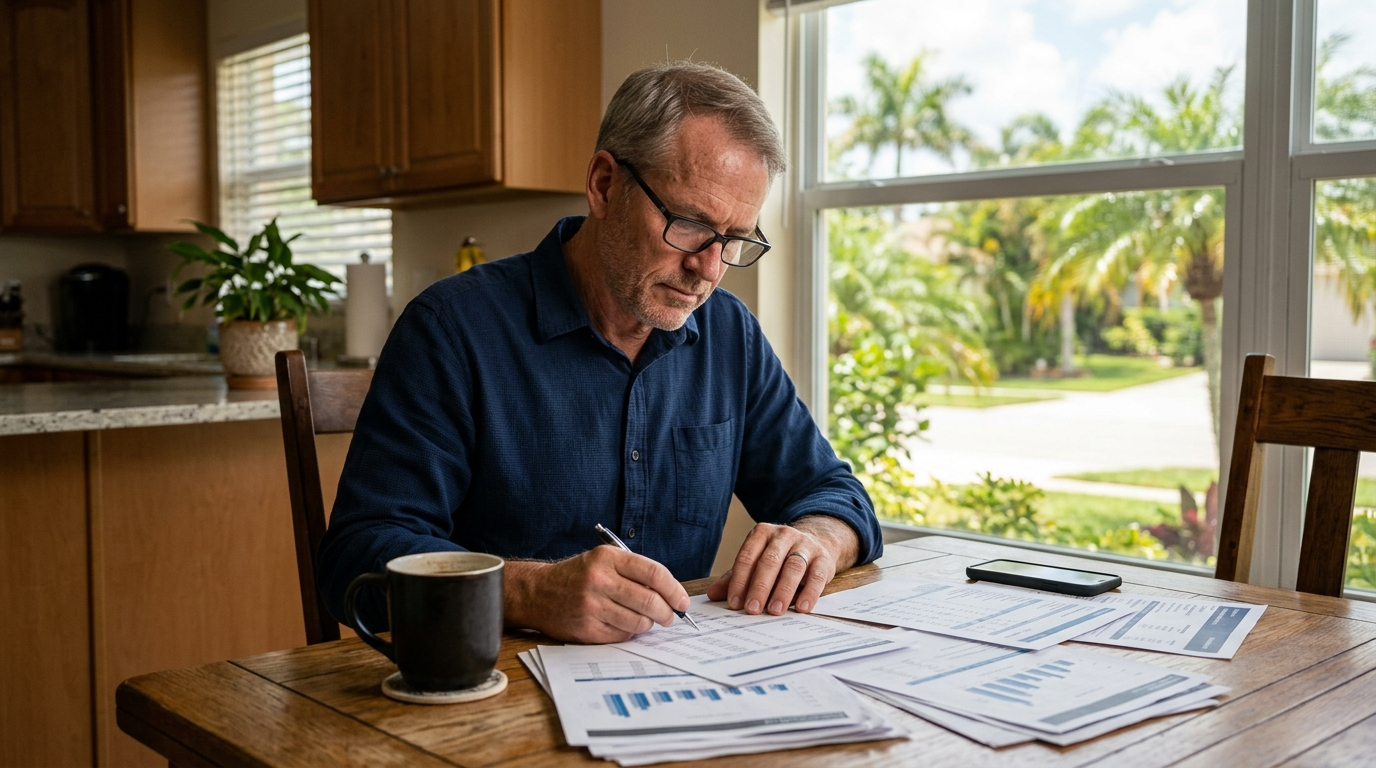
Knowing the monthly fee is just the first question. The financial health of the HOA itself matters just as much, and the documents tell you everything.
Documents to Request Before Making an Offer
Ask for the current budget, the reserve fund study, meeting minutes from the past 12 months, and the most recent financial statements. Florida gives buyers the right to review HOA disclosures before closing, and you should use that right. You’re looking for a reserve fund that’s at least 70% funded, no pattern of special assessments, and dues that have increased steadily rather than in sudden jumps.
Red Flags in HOA Financials
A reserve fund below 50% funded is a significant concern. Multiple special assessments in recent years, deferred maintenance on common areas, pending litigation involving the HOA, or high homeowner delinquency rates are all warning signs worth taking seriously. Don’t skip this step because the community looks nice from the road.
HOA Fees and Your Mortgage: How Lenders Calculate It
Most buyers are surprised to learn how directly HOA fees affect their loan approval. According to the Florida Division of Condominiums, Timeshares, and Mobile Homes, HOA-governed properties in Florida operate under specific state statutes, and lenders are required to factor those dues into their underwriting calculations.
How HOA Dues Affect Your Debt-to-Income Ratio
Lenders include your full monthly HOA payment in your housing expense calculation. A $300 monthly HOA fee can reduce your maximum purchase price by $40,000 to $60,000 depending on your income and loan type. Buyers who don’t account for dues during pre-approval sometimes find they qualify for significantly less home than they expected.
How Kassidy Helps Buyers Evaluate Total Monthly Cost
There’s a real difference between knowing what a home costs to buy and knowing what it costs to own every single month. That’s a distinction I make a point of discussing with every buyer, early in the process.
Why I Run a Full Cost Analysis on Every Property
When a buyer brings me a listing they’re excited about, I don’t just look at the purchase price. I pull HOA documents, review reserve fund health, and calculate the full monthly payment including dues. I compare it to nearby non-HOA alternatives at similar price points. HOA fees in Florida change the math on which home is actually the better financial choice, and that conversation is worth having before you write an offer.
HOA-Free vs. HOA: Which Is Really Cheaper Long Term
A higher-priced non-HOA home isn’t automatically the better deal, and a lower-priced HOA home isn’t automatically cheaper. Sometimes bundled amenities and exterior coverage in an HOA save you real money. Sometimes the dues push your monthly payment well past what a comparable non-HOA home would cost. The only way to know is to run both scenarios, which is exactly what we do together.