

Florida’s statewide single-family median was $415,000 in September 2026, up 1.2% from a year earlier, according to Florida Realtors. North Florida is cheaper and varies widely by town: Palatka’s median was about $220,000 for the three months to September 2026 (Redfin), far below St. Johns County. Prices have cooled from the 2020-23 run-up but are holding, not crashing, so buyers now have room to negotiate.
Are home prices rising, falling or leveling off? If you’re planning to buy, it’s hard to know when to act, what to pay or where in North Florida to look.
To see today’s asking prices for yourself, you can search current North Florida homes for sale by county.
The market has changed a lot. From 2020 through 2023, prices climbed fast, with bidding wars and homes selling almost instantly. Since then the market has cooled: inventory has grown, buyers have more choices and real negotiation is possible again. Prices are still high, though. They are stabilizing, not crashing. This guide covers current prices by area and county, what drives them, where they are heading and how to buy well.
Average Home Prices in North Florida (2026)
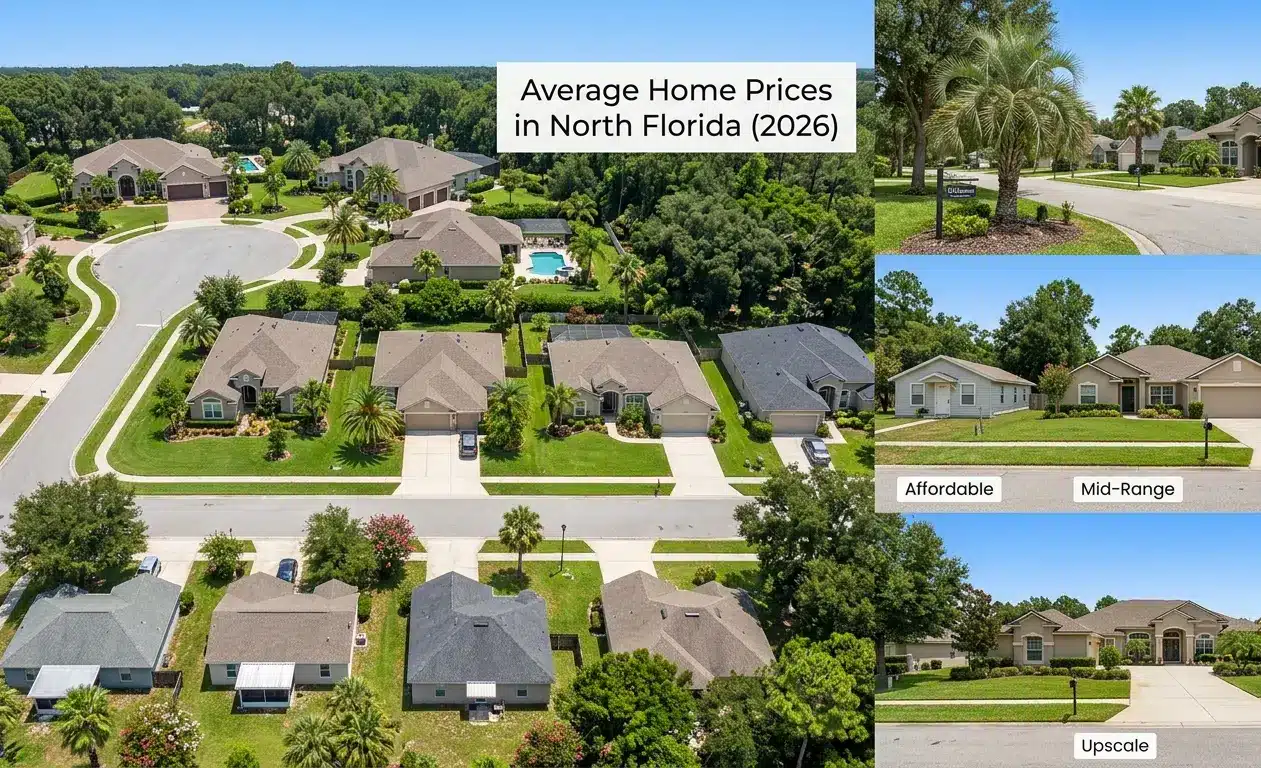
Home prices in North Florida vary widely by location, and most of the region sells below the statewide median of $415,000. Typical medians by area:
- Jacksonville: about $325,000, with the most inventory and jobs in the region.
- Gainesville: about $325,000, supported by the University of Florida and strong rental demand.
- St. Augustine: $400,000 to $450,000, reflecting its historic charm, coastal location and tourism economy.
- Orange Park: $300,000 to $325,000 for family-friendly suburban living in Clay County.
- Palatka: $180,000 to $220,000, one of the most affordable small towns in the region.
- Lake City: $170,000 to $200,000, rural with fewer jobs and very low housing costs.
Across North Florida, the overall median runs about $275,000 to $325,000, far below Miami (over $550,000) and below Tampa and Orlando (about $375,000 each). Because these are medians, half of homes sell above and half below. Broadly, entry-level homes cost $180,000 to $250,000, mid-range homes $250,000 to $400,000, and premium homes more than $400,000.
Understanding whether to rent vs buy in Florida depends heavily on current home prices and your long-term plans.
Home Prices by County in North Florida
Prices differ sharply from county to county, so it helps to compare them one by one.
St. Johns County: Premium Pricing
St. Johns County is the most expensive, with a median of about $425,000 to $475,000. Ponte Vedra Beach sits at the top at $500,000 to $800,000 or more for beach access and luxury communities. The city of St. Augustine runs $375,000 to $500,000, and suburban Fruit Cove $400,000 to $550,000 for newer developments and good schools.
Demand stays strong and inventory limited, largely because the schools are among the state’s best and families will pay a premium for them. Property taxes are higher too, reflecting strong services and infrastructure.
Clay County: Suburban Value
Clay County is moderately priced, with a median of about $300,000 to $325,000. Orange Park runs $280,000 to $350,000, waterfront Fleming Island $350,000 to $500,000, Middleburg $250,000 to $325,000 and small-town Green Cove Springs $200,000 to $280,000.
The commute to Jacksonville takes about 20 to 35 minutes, and the Clay County school district has a good reputation with strong programs and involved parents.
Alachua County: College Town Pricing
Alachua County’s median is about $315,000 to $350,000, shaped by the University of Florida. Gainesville itself runs $300,000 to $400,000, upscale Haile Plantation $400,000 to $600,000 and growing Tioga $300,000 to $425,000. Outlying towns such as Alachua, Newberry and High Springs cost less, at about $225,000 to $325,000.
Student housing demand keeps the rental market strong, and the local economy centers on education, healthcare and research.
Putnam County: Budget Champion
Putnam County is the most affordable, with a median of about $180,000 to $220,000. Palatka, the county seat, runs $170,000 to $250,000 with river access and small-town living. Rural Interlachen runs $140,000 to $200,000 with limited services, and lakefront Crescent City $160,000 to $240,000.
For budget buyers seeking value, explore affordable places to live in North Florida where home prices remain accessible.
Property taxes are low, at about 0.73%, below the state average. Schools are improving with community support, and the trade-off for the low prices is distance: Jacksonville is about 45 minutes away, with Gainesville also within reach.
What Affects Home Prices in North Florida
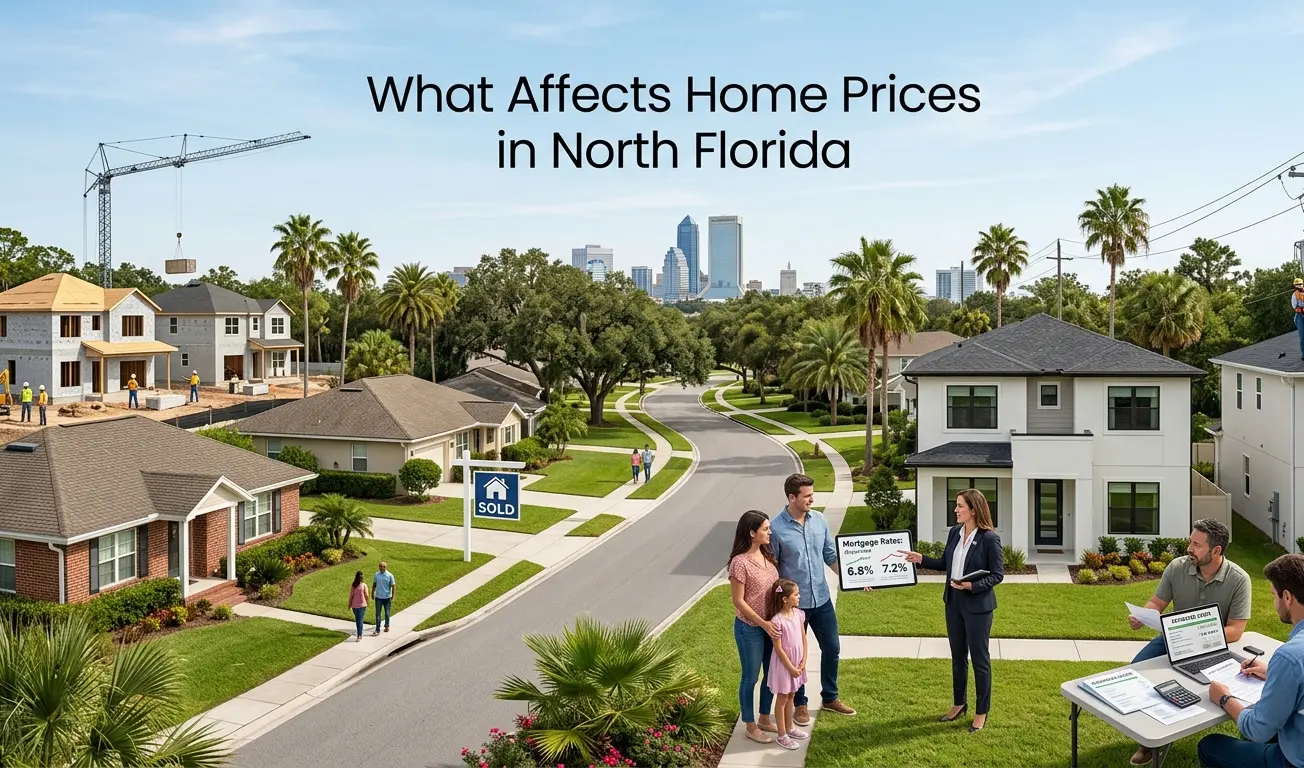
Several forces drive home prices here:
- Supply and demand: when buyers outnumber homes, prices rise; when homes outnumber buyers, they fall.
- Interest rates: lower rates make borrowing cheaper, while higher rates reduce buying power.
- Population and jobs: people moving in and a growing economy add buyers; a recession removes them.
- New construction: active building adds inventory, while slow building limits supply.
- Location: schools, commute, amenities and safety all carry a premium.
- The home itself: new and updated homes sell for more, fixer-uppers for less, and bigger lots, pools and waterfront add value.
According to the National Association of Realtors, local market conditions vary significantly from national trends. Buyer confidence, seller expectations and media coverage also shape how people behave in the market.
Are Home Prices Rising or Falling in North Florida?
Prices are leveling off rather than crashing or soaring. After rapid gains of 30% to 50% from 2020 to 2023, appreciation slowed to about 2% to 5% a year in 2024 and stayed moderate through 2025. The outlook for 2026 is continued stability, with about 2% to 4% appreciation expected.
Trends differ by area: St. Johns County remains strong, Putnam County is stable and Jacksonville is moderate. Inventory is improving, homes typically take 30 to 60 days to sell, and bidding wars are rare, so buyers have time to negotiate, inspect and include contingencies. Mortgage rates in the 6% to 7% range still limit buying power. Looking ahead, steady appreciation of about 2% to 5% a year is the most likely path, with no crash expected.
Affordable Areas to Buy a Home
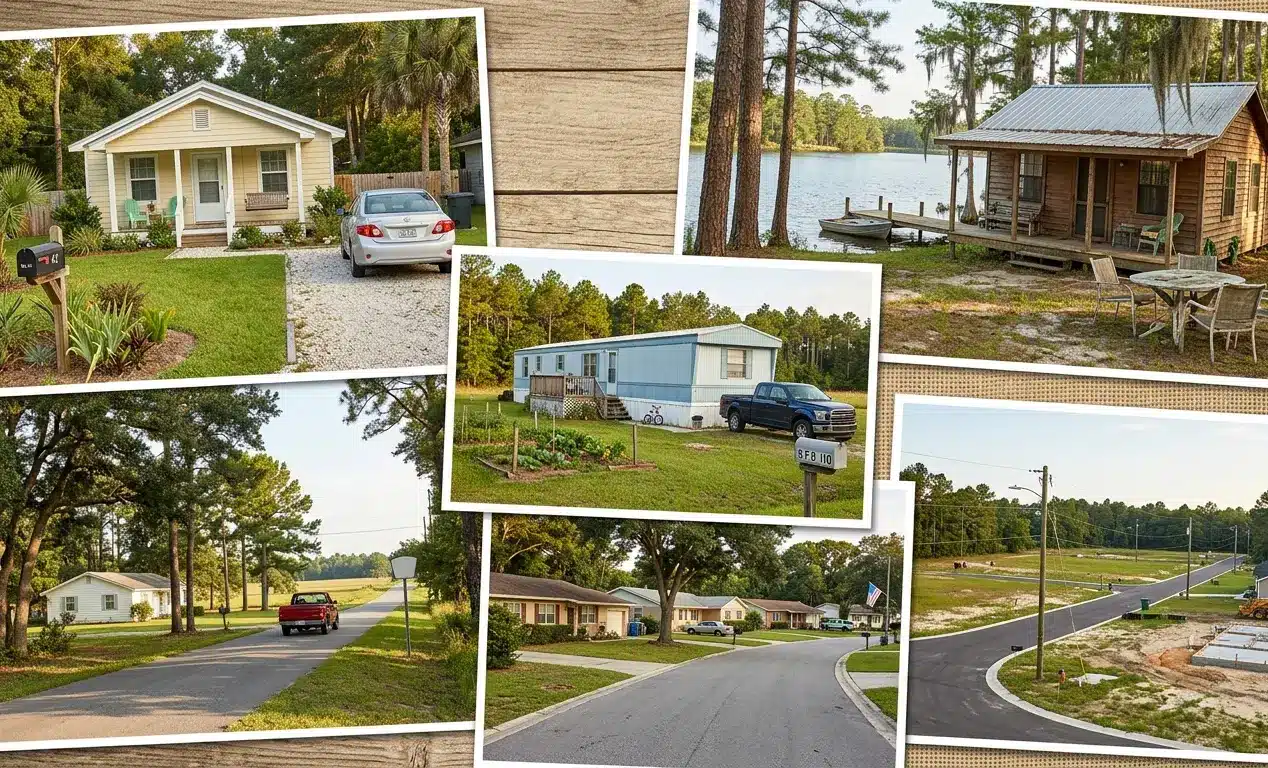
Budget buyers have good options:
- Lake City: $170,000 to $200,000, the cheapest overall, with limited amenities.
- Palatka: $180,000 to $220,000, with small-town charm and river access.
- Interlachen: $140,000 to $200,000 for basic rural living.
- Starke: $160,000 to $200,000, a small Bradford County town.
- Macclenny: $180,000 to $240,000 in slowly growing Baker County.
- Green Cove Springs: $200,000 to $280,000, an affordable way into Clay County.
- Alachua and Newberry: $225,000 to $300,000, with access to the university at lower cost.
These areas trade amenities for price: fewer jobs, longer commutes and less entertainment. In return, homeownership is within reach and you start building equity sooner.
When ready to search, browse homes for sale in North Florida to compare pricing across counties and cities.
Cost Comparison: Buying vs Renting
Here is how typical monthly costs compare in North Florida.
Buying in North Florida:
- Median home: $275,000 to $325,000
- 20% down payment: $55,000 to $65,000
- Mortgage at 7%: $1,460 to $1,730 a month
- Property tax: $190 to $225 a month
- Insurance: $200 to $350 a month
- Maintenance: $230 to $270 a month
- Total: $2,080 to $2,575 a month
Renting in North Florida:
- Median rent: $1,400 to $1,800 a month
- Renters insurance: $20 to $40 a month
- Utilities: $200 to $300 a month
- Total: $1,620 to $2,140 a month
In the short term, renting costs less, needs less cash upfront and gives you flexibility without maintenance. Over the long term, buying usually wins because you build equity and lock in a fixed payment, with the break-even point typically around year four or five. Your timeline, job stability, savings and credit decide which is right for you.
Compare current average rent in Florida to potential mortgage costs before making your decision.
North Florida Cost of Living Beyond Housing
Home prices are only part of the picture. The North Florida cost of living runs below the state average overall. A typical family spends about $250 to $400 a month on utilities (electricity is the largest, with summer AC), $600 to $900 on groceries, $400 to $700 on transportation and $300 to $800 on healthcare, plus $800 to $1,200 for childcare if needed and $200 to $500 on entertainment.
Property taxes are lower than in coastal counties, typically 0.73% to 0.85%, and Florida has no state income tax. All told, a family’s living expenses in North Florida usually run $3,500 to $5,500 a month, depending on choices.
How North Florida Compares to Other States
Compared with other states, North Florida offers good value:
- California: a median above $700,000, so North Florida homes at $275,000 to $325,000 cost half as much or less.
- New York: the New York City area runs above $600,000, so the savings are significant, with better weather.
- Texas: a median of about $300,000, so prices are similar; Texas also has no state income tax but has some of the highest property taxes in the country.
- Georgia: a median of about $320,000, very comparable.
- Tennessee: a median of about $310,000, a similar range.
North Florida is neither the cheapest nor an expensive place to buy. Add no state income tax, warm weather and easy beach access, and it is an affordable choice compared with many states, especially coastal ones.
Tips for Buyers in 2026
Timing Tips:
- Don’t try to time the market perfectly; buy when you are ready.
- Summer is often slightly slower, with more inventory and less competition.
- Sellers can be more motivated toward the end of the month.
- Watch interest rates, since lower rates increase your buying power.
Negotiation Tips:
- Price, closing costs and repairs are all negotiable, so ask.
- Use the inspection to find issues and request repairs or credits.
- If the appraisal comes in low, renegotiate the price.
- Stay objective and be ready to walk away.
Financing Tips:
- Get pre-approved so you know your budget and sellers take you seriously.
- Compare several lenders, since rates vary and the savings can reach thousands.
- Consider conventional, FHA, VA and USDA loans.
- A larger down payment can lower your rate and payment and avoid PMI.
Location Tips:
- Schools matter for resale value even if you don’t have children.
- Test the commute at the times you would actually drive.
- Check planned development nearby, since new homes and shops help while industrial projects can hurt.
- Walk the neighborhood in the day, at night and on a weekend.
General Tips:
- Work with a buyer’s agent for expert guidance.
- Never waive the inspection.
- Budget 2% to 5% of the price for closing costs.
- Keep an emergency fund, because homeownership brings surprises.
Market Predictions for North Florida
Continued stability is the most likely outlook, with about 2% to 4% appreciation in 2026. Inventory should keep improving, giving buyers more choice. Interest rates remain the big unknown and depend on the Federal Reserve, inflation and the wider economy.
Underlying demand stays healthy: people keep moving to Florida, North Florida remains attractive, healthcare and technology jobs are growing, and new construction is adding supply. If rates fall to 5% to 6%, affordability improves and appreciation could reach 4% to 6%. If rates rise above 8%, demand would cool and prices could stall at 0% to 2% growth. Either way, the fundamentals do not point to a crash.
Is it a good time to buy? If you plan to stay at least five years, have your down payment ready and a stable job, it can be.
Make Smart Home Buying Decisions
North Florida offers real value, from affordable Palatka to premium St. Johns County, with options for every budget and lifestyle. Bidding wars have faded, inventory is improving and buyers can negotiate again, although prices remain well above 2019 levels.
The right move depends on your timeline, finances, job stability and family needs. Research the areas that interest you, visit in person, compare prices and run the numbers. If you’re financially ready and committed for the long term, 2026 could be your year to buy in North Florida.