

People moving to Florida usually start their search in the usual places, Jacksonville, Tampa, Orlando. But living in Ocala FL keeps showing up on relocation lists in 2026, and it’s not hard to understand why. Lower home prices than most Florida metros, a genuinely different pace of life, and access to outdoor spaces that bigger cities simply can’t match.
That said, Ocala isn’t the right fit for everyone. I’m Kassidy Babcock, a Northeast Florida realtor with Timber To Tides Realty. I work across Putnam, Clay, St. Johns, and Alachua counties, and I talk regularly with buyers who are weighing Ocala against other North Florida markets. This is the honest guide I’d want you to have before you make any decisions.
What Living in Ocala FL Is Actually Like Day to Day
Before anything else, let’s talk about what day-to-day life actually feels like here. Because living in Ocala FL delivers a very different experience from what most people picture when they think of Florida.
The Pace, the People, and What Nobody Warns You About
Ocala moves slowly. That’s a feature for a lot of people and a dealbreaker for others. The city sits in Marion County in North Central Florida with about 68,000 people inside city limits and around 350,000 in the wider metro area. It has a genuine small-town feel, the kind where people wave at each other in parking lots and know the names of their neighbors. But if you’re used to the density of Orlando or the energy of Jacksonville, the adjustment can feel significant. There isn’t a major sports team, a large music venue, or a vibrant nightlife strip. What there is, is space, community, and a quality of life that residents describe as genuinely restful.
Ocala vs. What Buyers Expect vs. Reality
Most buyers who research living in Ocala FL are expecting a rural horse town and are pleasantly surprised by a city with a real downtown, solid medical infrastructure, and a commercial strip along I-75 that covers most daily needs. The “Horse Capital of the World” branding is accurate. There are more than 400 thoroughbred farms and training centers operating in Marion County, and the equestrian culture is visible everywhere. But Ocala is also home to healthcare systems, manufacturing employers, and a retail corridor that handles everyday life without driving to another city.
Cost of Living in Ocala FL in 2026
This is one of the strongest arguments for living in Ocala FL, especially for buyers coming from Florida’s coastal markets or relocating from higher-cost states.
Home Prices by Neighborhood Type
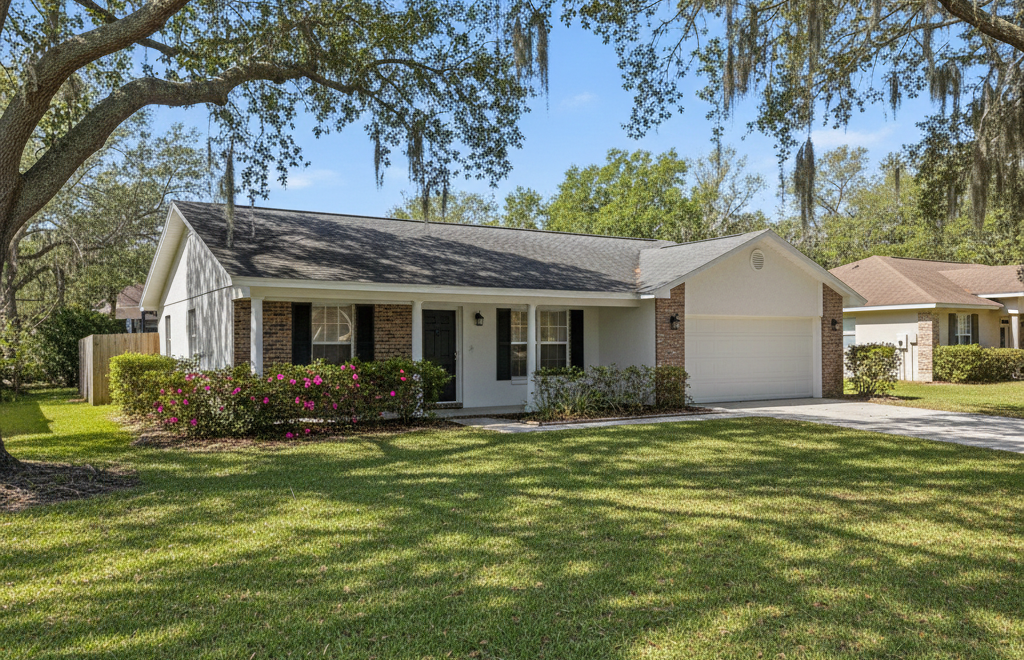
The median home value in Ocala sits around $240,000 to $270,000 in 2026, depending on neighborhood and property type. That’s well below the Florida statewide average and significantly below markets like St. Johns County or Sarasota. Downtown bungalows and older established neighborhoods offer entry-level options below $200,000. Newer construction in master-planned communities runs $280,000 to $380,000. Horse farm properties and acreage obviously push higher depending on land size.
Monthly Expenses Beyond the Mortgage
The overall cost of living in Ocala FL sits roughly at the national average by composite index, which makes it one of the more affordable Florida cities on a full-budget basis. Groceries, utilities, and daily expenses don’t carry the coastal premium you’d pay in Fort Lauderdale or Naples. Property taxes in Marion County are moderate. Many older neighborhoods have no HOA, which removes a cost that’s unavoidable in much of St. Johns County. For budget-focused buyers, Ocala offers a combination of lower purchase prices and lower ongoing costs that’s genuinely hard to find elsewhere in Florida.
Ocala’s Job Market: Who Thrives Here and Who Struggles
The job market is where living in Ocala FL has its most honest limitations, and it’s worth understanding clearly before you relocate.
Healthcare, Equestrian, and Manufacturing Industries
Ocala’s largest employers are in healthcare and the equestrian industry. AdventHealth Ocala and HCA Florida Ocala Hospital anchor the healthcare sector, making the city a solid landing spot for nurses, administrators, and allied health professionals. The equestrian economy supports veterinarians, trainers, grooms, and farm managers. On the manufacturing side, companies like Lockheed Martin and several logistics and distribution operations employ a meaningful chunk of the workforce.
Remote Workers and Retirees: Who Ocala Is Built For
The honest answer is that living in Ocala FL works best for remote workers, retirees, and people whose income doesn’t depend on local employers. The job market is thinner than Jacksonville, Gainesville, or Orlando for professional and technical roles. If you’re relocating with a remote position already secured or you’re entering retirement with savings and income in place, Ocala is an excellent financial and lifestyle fit. If you need to find a new job after moving, you should research available positions carefully before committing.
Neighborhoods Worth Knowing in Ocala FL

Living in Ocala FL means choosing between some genuinely different environments depending on what you’re after.
Downtown Ocala and the Historic District
Downtown Ocala has gone through real revitalization in recent years. The brick-paved streets and historic storefronts house local restaurants, coffee shops, boutiques, and small businesses that give the area real character. The Appleton Museum of Art and the Reilly Arts Center provide cultural anchors. For buyers who want walkability and a neighborhood with a sense of identity, the older downtown neighborhoods are worth a serious look.
Horse Farm and Rural Property Options
The rural stretches outside Ocala proper are where the equestrian lifestyle becomes a real possibility. Five-to-twenty-acre parcels with existing barns and paddocks are available at price points that simply don’t exist in coastal Florida. If owning horses or raising livestock is part of what draws you to living in Ocala FL, the inventory exists to make that realistic.
Schools, Healthcare, and Day-to-Day Infrastructure
These factors matter significantly for families and retirees evaluating living in Ocala FL as a long-term decision.
Marion County School Performance
Marion County schools perform at a mid-range level compared to Florida’s top districts. Families who prioritize school district quality, and who have St. Johns County or Clay County as alternatives, should do a direct comparison before deciding. That said, there are specific schools and magnet programs within Marion County that perform well. The district is not a dealbreaker for every family, but it’s worth researching at the school-specific level rather than assuming uniform performance.
Healthcare Access and Commute Patterns
Healthcare access in Ocala is genuinely solid for a city of its size. Two hospital systems serve the metro area, and specialty care has expanded meaningfully over the past several years. Commutes within Ocala are short, with an average of around 17 minutes, and I-75 connectivity makes Gainesville and Tampa accessible for anything the city doesn’t offer locally.
Outdoor Life and the Ocala National Forest

This is where living in Ocala FL genuinely stands apart from most Florida cities. The outdoor access here is extraordinary.
Silver Springs, Rainbow River, and Equestrian Access
Silver Springs State Park sits just east of the city and offers glass-bottom boat tours, kayaking, and swimming in springs fed by 550 million gallons of water daily. Rainbow River in nearby Dunnellon is consistently ranked among Florida’s clearest waterways for tubing and kayaking. According to Visit Florida, the Ocala National Forest covers more than 400,000 acres and includes over 600 miles of trails for hiking, mountain biking, and horseback riding. For buyers who want outdoor access as a core part of daily life, Ocala delivers this at a level most Florida markets can’t match.
What Outdoor Access Really Looks Like as a Resident vs. Visitor
This distinction matters. As a visitor, you drive to the forest, spend a day, and leave. As a resident living in Ocala FL, these places become part of your regular weekend routine. That’s a meaningful quality-of-life factor that doesn’t show up in a price comparison spreadsheet but shows up every single week.
Ocala vs. Nearby North Florida Markets: An Honest Comparison
Because I work across Northeast Florida, I can give you a comparison most guides can’t.
Ocala vs. Gainesville (Alachua County)
Gainesville sits about 40 minutes northeast of Ocala and operates as a college town anchored by the University of Florida. The job market is stronger and more diverse, especially for healthcare and education professionals. Home prices are similar, though Gainesville’s rental market is exceptionally active due to the student population. If you’re weighing these two markets, take a look at homes for sale in Alachua County and compare what your budget buys in each. The communities feel different, and the right choice depends on your lifestyle priorities.
Ocala vs. Palatka (Putnam County): The 45-Minute Question
Here’s a comparison I have firsthand experience with. Palatka and the broader Putnam County market sit about 45 minutes northeast of Ocala. Home prices in Putnam County are comparable and often lower, with strong waterfront access along the St. Johns River. There’s no significant traffic on I-75 or US-19 between the two areas, so buyers who are open to either market can genuinely compare them side by side. The buyers I’ve worked with who looked at both and ended up in Putnam County typically chose it for the river access, the lack of HOA in most neighborhoods, and the proximity to Northeast Florida’s job centers in Jacksonville, Gainesville, and St. Augustine. Browse Putnam County homes for sale if you haven’t already looked at what this market offers.
How Kassidy Helps Buyers Comparing Markets Across North Florida
Living in Ocala FL is a legitimate lifestyle and financial choice for the right buyer. But it’s not the only option worth evaluating in this part of the state.
Why Some Ocala Searchers End Up in Northeast Florida
I’ve talked with buyers who started their search specifically in Ocala and ended up purchasing in Putnam or Alachua County because the comparison revealed something they hadn’t considered, whether that was river access, school proximity, or commute patterns to Jacksonville. The overlap between what draws people to Ocala and what Northeast Florida offers is significant, and the 45-to-60-minute drive between these markets makes them genuinely comparable for most buyers.
If you want to understand the full picture of North Florida real estate markets before making a decision, that’s a conversation worth having before you commit to any one area.