

Buying your first home in Florida follows eight steps: check your credit and budget (keep housing under about 28% of gross monthly income), look into first-time buyer programs, get pre-approved, house hunt, make an offer, get a home inspection, finalize your mortgage and close. You do not need 20% down: FHA loans start at 3.5%, and Florida Housing programs can help with the down payment and closing costs.
Buying your first home is exciting and a little nerve-racking at the same time.
When you’re ready to look at real homes, you can search current North Florida homes for sale by budget and county.
As a first-time home buyer in Florida, you probably have plenty of questions: How much money do I need? What credit score do I need? Where do I even start? Thousands of people buy their first home in Florida every year, and many of them felt just as unsure at the beginning. This guide walks you through each step in plain language, from checking your finances to getting the keys.
Check Your Finances First
Before you start scrolling through listings, find out what you can comfortably afford.
Your Credit Score Matters
Lenders use your credit score to decide whether to give you a mortgage and at what rate, so it is one of the first things they check. Most loans call for a score of at least 620, while FHA loans are more forgiving and accept scores as low as 580.
Pull your credit report for free, dispute any errors and pay down credit card balances where you can. Every point you gain can improve your options.
Calculate What You Can Afford
A common guideline is to keep total monthly housing costs, including the mortgage, taxes, insurance and HOA fees, under 28% of your gross income. If you earn $4,000 a month, that means keeping housing under $1,120; at $6,000 a month, under $1,680.
Online mortgage calculators help you test different down payments and see realistic monthly payments. Be sure to include property taxes and insurance in every estimate.
Save for a Down Payment
The down payment worries many first-time buyers, but you don’t need 20%. FHA loans require as little as 3.5% down, some conventional loans 3%, and VA loans nothing at all for eligible buyers.
Putting more down lowers your monthly payment, and reaching 20% on a conventional loan removes private mortgage insurance. Whatever your target, start saving now.
Understand First Time Buyer Programs Florida Offers
Florida has several programs that can save first-time buyers thousands of dollars.
Florida Housing Finance Corporation
The Florida Housing Finance Corporation runs programs specifically for first-time buyers in Florida, including down payment assistance and below-market interest rates through participating lenders.
You will need to complete a homebuyer education course, which is usually online and takes a few hours. Income limits apply and vary by county and household size, and limits in many North Florida counties are higher than people expect, so it is worth checking whether you qualify.
Down Payment Assistance
Several programs help with the down payment and closing costs. Some are grants you never repay; others are second mortgages with low or no interest. The popular Florida Assist program provides down payment and closing cost help that you combine with a first mortgage.
Counties and cities also run their own programs, so check what is available where you want to buy. Different areas throughout Florida each have their own programs and benefits worth exploring.
Property Tax Benefits
Once you own the home and live in it as your primary residence, you can apply for Florida’s homestead exemption, which lowers your property taxes. Apply with the county property appraiser soon after closing; the savings add up year after year.
Get Pre-Approved for a Mortgage
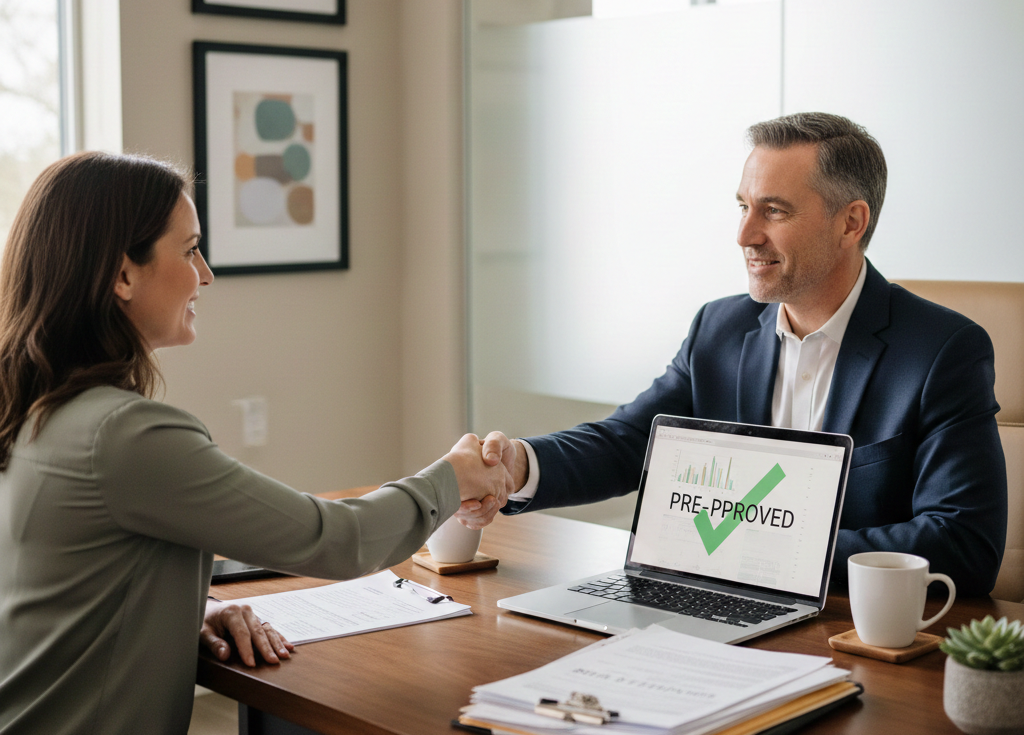
Don’t skip pre-approval. It means a lender has reviewed your finances and agreed, in principle, to lend you a specific amount, which tells you your real budget and shows sellers you are serious.
Shop Around for Lenders
Talk to at least three lenders and compare rates, fees and terms. Local banks and credit unions know the Florida market well, while online lenders sometimes offer lower rates. Ask each one about FHA, conventional and VA loans, since each works differently depending on your situation.
Gather Your Documents
Lenders will ask for pay stubs, tax returns, bank statements, employment verification and photo ID. If you are self-employed, expect to provide more, including at least two years of tax returns.
Don’t Change Anything Financial
After you are pre-approved, avoid opening new credit cards, financing a car or changing jobs. Any big financial change can put your approval at risk.
Find the Right Real Estate Agent
A good agent makes buying your first home in Florida much easier. They know local values, spot red flags, handle negotiations and guide you through each step of the Florida home buying process.
Since 2024, buyers sign a written agreement with their agent before touring homes, and that agreement spells out how the agent is paid. Sellers often still cover the buyer’s agent’s fee, but it is negotiable, so ask about it up front.
Interview a few agents and ask how many first-time buyers they have helped. Working with a local Realtor who knows the market makes buying your first home in Florida much smoother.
Start House Hunting
This is the fun part, but it pays to stay focused.
Make Your Must-Have List
Write down what you truly need, such as three bedrooms, two baths or a garage, and then list the nice-to-haves, such as an updated kitchen or a pool. Knowing the difference keeps your search realistic.
Search Smart
Online listings are a great start, but in busy markets some homes sell quickly, so ask your agent to set up alerts for new listings. Drive through the neighborhoods you like, too. When searching for homes for sale in North Florida, seeing an area in person gives you a real feel for the community.
Take Notes
After ten showings, homes start to blur together, so take photos and notes at each one.
Make an Offer
Once you find the right home, your agent will pull comparable sales, which show what similar homes nearby sold for recently, to help you set a fair price. In competitive markets homes can sell above asking; in slower markets you may be able to offer below.
Your offer covers more than price. It sets the closing date and includes contingencies for financing, inspection and appraisal that protect you if something goes wrong. You will also put down an earnest money deposit, usually 1% to 3% of the price, to show you are serious. If the deal falls through for a reason covered by your contract, you get it back; if you close, it goes toward your purchase.
Get a Home Inspection
Never skip the inspection. Inspectors find problems you would never notice, from roof, electrical and plumbing issues to mold and termites. Termite inspections are standard in Florida because the humidity makes wood damage a real concern, and older North Florida homes may have outdated systems.
Attend the inspection if you can and ask questions. If it turns up major problems, you can ask the seller to make repairs, negotiate a lower price or walk away.
Finalize Your Mortgage
While the inspection is underway, your lender works on your loan. Stay in close contact and respond quickly to any requests.
The Appraisal
Your lender orders an appraisal to confirm the home is worth what you are paying, because it will not lend more than the appraised value. If the appraisal comes in low, you can renegotiate the price, increase your down payment or walk away.
Final Loan Approval
An underwriter reviews your income, debts, credit and the property one more time and may ask for more documents. Answer quickly, and don’t make big purchases or change jobs.
Lock Your Interest Rate
Mortgage rates change daily. Locking your rate keeps it fixed for a set period, usually 30 to 60 days, and your lender can advise you on when to lock.
Handle Closing Costs
Closing costs surprise many first-time buyers in Florida. They typically add up to 2% to 5% of the purchase price.
What’s Included
Common costs include title insurance, which protects your ownership and is standard in Florida; lender fees for processing the loan; an appraisal at about $400 to $600; and a home inspection at about $300 to $500. Recording fees, transfer taxes, the first year of homeowner’s insurance and prorated property taxes are also usually paid at closing.
Review the Closing Disclosure
You will receive your Closing Disclosure at least three days before closing. It lists every cost in detail, so check each number and question anything that looks wrong.
Close on Your Home
On closing day you will sign the mortgage documents, the deed, disclosure forms and title paperwork. The closing agent explains each document, so ask about anything that is unclear.
Final Walk-Through
Before closing, do a final walk-through to confirm agreed repairs were made, the home is in the same condition and the appliances are still there.
Get Your Keys
Once everything is signed and the funds are transferred, you get the keys. You’re officially a homeowner.
Special Florida Considerations
The Florida home buying process has a few features every first-time buyer should know about.
Flood Insurance
Many Florida homes need flood insurance, and lenders sometimes require it even outside high-risk zones. It is separate from homeowner’s insurance, and the cost depends on the flood risk, so check flood maps before you buy.
Homeowners Associations
Many Florida communities have HOAs that maintain common areas and enforce rules, and their fees can be significant. Get the HOA documents before you buy and review the budget, rules and any upcoming assessments, because some associations are run much better than others.
Hurricane Preparedness
Florida homes need to stand up to hurricanes, and insurance costs reflect that risk. Newer homes generally handle storms better, while older homes may need upgrades such as impact windows. Budget for hurricane supplies and a possible evacuation as part of life in Florida.
Common Mistakes to Avoid
Learning from other buyers’ mistakes can save you a lot of stress.
Skipping Pre-Approval
House hunting without pre-approval wastes time: you may fall for homes you can’t afford, and sellers won’t take your offers as seriously.
Draining Your Savings
Don’t put every dollar into the down payment. Keep at least a few thousand dollars in reserve after closing, because the AC will eventually break and the roof will eventually need work.
Ignoring Hidden Costs
Owning a home costs more than the mortgage. Property taxes, insurance, HOA fees, maintenance and utilities all add up, so budget for all of them.
Buying Too Much House
Being approved for an amount doesn’t mean you should spend all of it. Leave room in your budget for the rest of your life so you don’t become house-poor.
Your Path to Homeownership Starts Now
Being a first-time home buyer in Florida doesn’t have to be overwhelming. There are steps and paperwork, but millions of people have completed the process successfully. Start with your finances, get pre-approved, find a good agent, use the first-time buyer programs Florida offers and take the process one step at a time.
The more prepared you are, the smoother it goes. Know what to expect at each stage, ask questions when something is unclear and don’t rush big decisions. It can feel daunting at times, but there’s nothing like walking through the door of a home that’s yours. Take the first step, and each one after it gets easier.