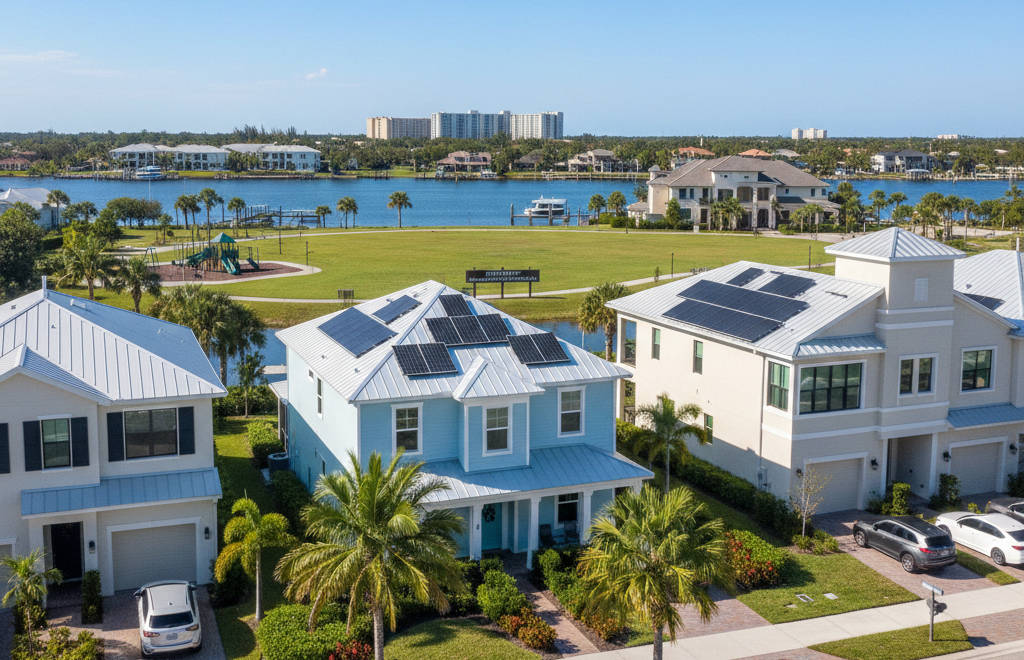


The Florida housing market 2026 looks meaningfully different from the frenzy of 2021 and 2022, and that difference creates real opportunities for buyers who understand the current dynamics rather than assuming conditions from either extreme still apply. Inventory has increased across most Florida markets. Days on market have lengthened. Multiple-offer situations have become less common in many price tiers. But strong underlying demand from inbound migration, a tax environment that continues drawing high-income buyers from coastal states, and limited supply in well-performing school districts have prevented the kind of dramatic price correction that some market watchers predicted. The Florida housing market 2026 is not a buyer’s free-for-all or a seller’s guaranteed windfall, it’s a market that rewards preparation, accurate pricing, and realistic expectations on both sides of the transaction. For buyers and sellers specifically focused on the Northeast Florida region, the North Florida real estate overview gives you the regional context before the national picture. Understanding the Florida housing market 2026 requires separating the statewide patterns from the local dynamics that actually govern individual transactions. Statewide numbers mask enormous variation between markets that are performing very differently.
 The Florida housing market 2026 in Northeast Florida has specific dynamics that differ from the state’s major metros in ways that matter for buyers and sellers in Putnam, Clay, St. Johns, and Alachua counties. Understanding home prices in North Florida 2026 gives you the county-level pricing baseline before you evaluate any specific property or listing strategy.
 Seller conditions in the Florida housing market 2026 require more preparation and more realistic pricing than the 2021 to 2022 market demanded.
Florida Housing Market 2026: The Macro Picture
 Understanding the Florida housing market 2026 requires separating the statewide patterns from the local dynamics that actually govern individual transactions. Statewide numbers mask enormous variation between markets that are performing very differently.
Inventory and Supply Conditions
Florida’s housing inventory increased meaningfully from 2023 through 2025 as interest rate increases slowed buyer demand and new construction completions added supply. In 2026, that inventory increase has moderated, buyers have absorbed much of the additional supply in well-located markets while some overpriced properties continue sitting. The net result is a market with more choices for buyers than existed two years ago but not the inventory depth of a true buyer’s market. Well-priced, well-presented homes in strong school zones are still moving quickly. Properties priced above market comparables are sitting longer and requiring corrections.Interest Rate Environment in 2026
Mortgage rates in 2026 remain elevated compared to the historic lows of 2020 and 2021. The Federal Reserve’s rate posture has kept borrowing costs higher than the previous decade’s baseline, which has compressed purchasing power meaningfully compared to what buyers could qualify for in 2020. A buyer who qualified for a $400,000 home at 3 percent interest in 2021 qualifies for approximately $290,000 to $310,000 at current rates with the same income and down payment. According to the National Association of Realtors, existing home sales nationally have adjusted to the higher rate environment, with transaction volume stabilizing rather than continuing to decline as the market absorbs the new rate reality.Northeast Florida Market Conditions in 2026
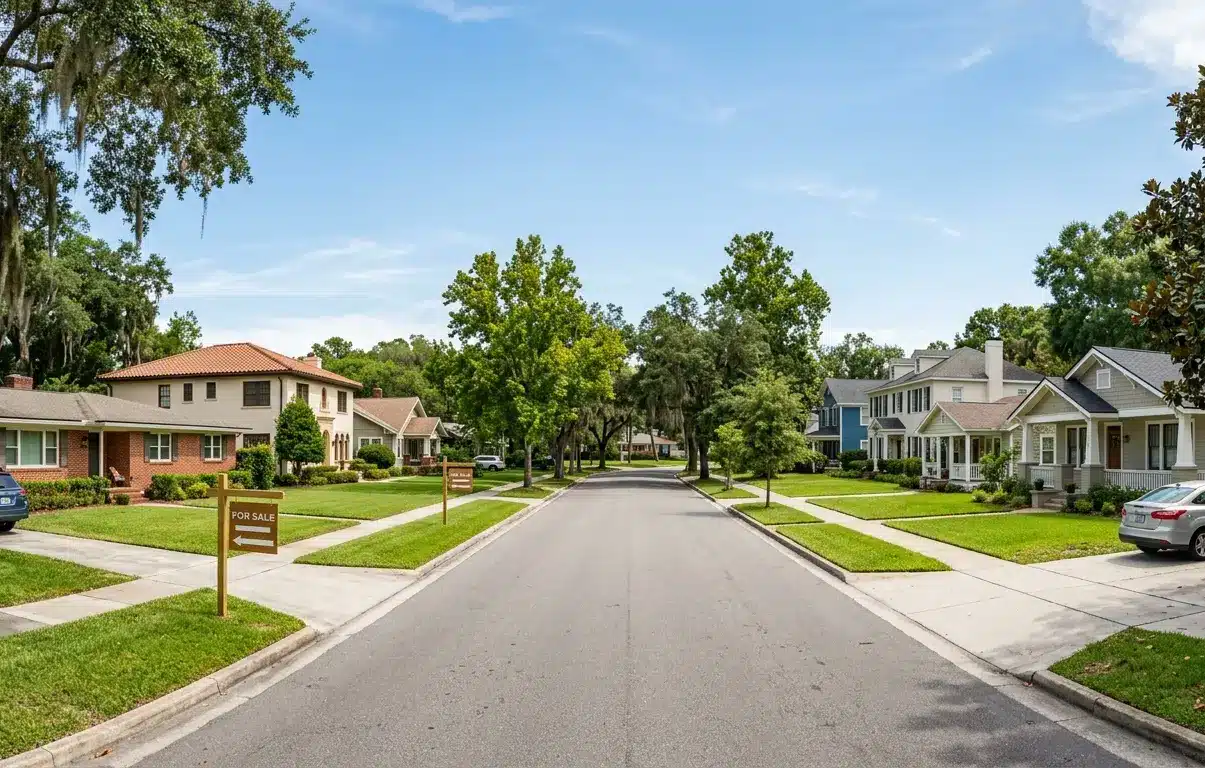 The Florida housing market 2026 in Northeast Florida has specific dynamics that differ from the state’s major metros in ways that matter for buyers and sellers in Putnam, Clay, St. Johns, and Alachua counties. Understanding home prices in North Florida 2026 gives you the county-level pricing baseline before you evaluate any specific property or listing strategy.
How Each County Is Performing
Putnam County remains a buyer-favorable market in 2026. Inventory is relatively high compared to demand, days on market run longer than regional averages, and sellers are generally negotiating. This combination benefits buyers who aren’t in a rush and want maximum leverage. Clay County continues performing with more seller-side strength, particularly in school-zone properties in Fleming Island and Orange Park where demand from families consistently outpaces available supply. St. Johns County’s premium market has experienced more price sensitivity at the upper end but continues showing strong demand in the $300,000 to $500,000 range. Alachua County’s market is anchored by University of Florida employment stability and healthcare demand that insulates it from the most significant rate-driven demand compression.Is It a Good Time to Buy in the Florida Housing Market 2026
The Florida housing market 2026 debate about timing is ultimately less productive than the question of whether a specific buyer is financially and personally ready to purchase. Trying to time the market perfectly costs more buyers their best opportunities than it saves.The Case for Buying Now
The best time to buy a home in Florida analysis consistently shows that buyers who wait for perfect market conditions often wait through multiple market cycles without ever finding conditions they consider optimal. In 2026, buyers benefit from more inventory than existed in 2021 and 2022, longer time on market that allows for proper due diligence, and sellers who are more willing to negotiate on price, repairs, and closing cost contributions than they were during the pandemic-era frenzy. If your personal financial situation supports a purchase and you’ve found a home that meets your needs at a price your budget can sustain, the Florida housing market 2026 conditions are more favorable for thoughtful buyers than the previous two years were.The Case for Waiting
Buyers with credit challenges, insufficient down payment reserves, or income instability are better served by addressing those factors before entering the Florida housing market 2026 regardless of market conditions. And buyers who are uncertain about their long-term location plans should consider that transaction costs in Florida, commissions, title insurance, closing costs, typically run 8 to 12 percent of the sale price on a round trip, which requires several years of appreciation or equity building to overcome if a sale becomes necessary sooner than planned.Florida Housing Market 2026 for Sellers
 Seller conditions in the Florida housing market 2026 require more preparation and more realistic pricing than the 2021 to 2022 market demanded.