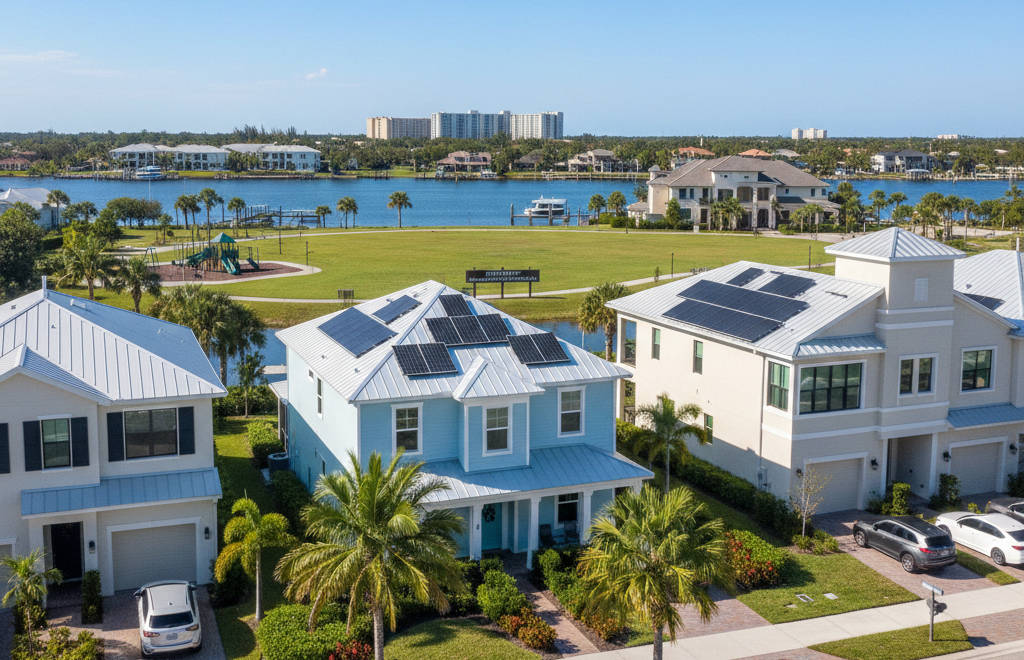


Home selling costs in Florida catch more sellers off guard than almost any other part of the transaction. Sellers who focus exclusively on their listing price often discover at the closing table that they are walking away with significantly less than they expected , not because the market let them down, but because the full cost picture was never laid out clearly before they listed. Home selling costs in Florida include real estate commissions, closing costs, pre-listing preparation expenses, and carrying costs that accumulate every month a home sits unsold. Understanding each category before you decide to list gives you an accurate picture of your actual net proceeds and a realistic basis for the decisions that follow. If you’re evaluating whether now is the right time to sell in the Northeast Florida real estate market, starting with a clear cost picture makes every subsequent decision more grounded.
Real Estate Commission: The Largest Single Cost

Real estate commission in Florida is negotiable and has been subject to notable changes following national commission structure reforms. Historically, total commissions ran 5 to 6 percent of the sale price split between the listing agent and the buyer’s agent. According to the National Association of Realtors, commission structures are now more variable following 2024 settlement changes, but sellers in the Northeast Florida market should still budget for total agent compensation in the 2.5 to 5 percent range depending on the specific agreement and market conditions. On a $350,000 Putnam County home, that range represents $8,750 to $17,500 in total commission costs , a meaningful line item that directly affects your net proceeds calculation before any other costs are factored in.
Closing Costs for Sellers in Florida
Home selling costs in Florida beyond commission typically run between 1 and 3 percent of the sale price for sellers. The primary components include title insurance, which in Florida is traditionally paid by the seller in most counties and typically runs 0.5 to 1 percent of the sale price. Documentary stamp taxes on the deed run 70 cents per $100 of sale price statewide, which on a $350,000 sale equals $2,450. Recording fees, settlement fees, and any outstanding property taxes prorated to the closing date add smaller additional amounts that vary by transaction. Sellers who are paying off a mortgage at closing will also face payoff fees and wire transfer charges from their lender that typically run $100 to $400 depending on the institution.
Step 1: Know What Your Home Is Actually Worth Before You Price It
Home selling costs in Florida only make financial sense in context of what you’re actually going to net after the sale. Before you can calculate that number, you need an accurate current market value for your specific property , not a Zillow estimate and not what your neighbor sold for eight months ago.
Why Accurate Valuation Matters for Cost Planning
Overpricing is the single most expensive mistake Florida sellers make, and it’s directly connected to the cost picture. A home that sits on the market for 90 days instead of 30 accumulates carrying costs , mortgage payments, utilities, insurance, and lawn maintenance that erode net proceeds just as directly as any closing cost line item does. A well-priced home that closes in 30 days costs significantly less to sell than an overpriced home that closes in 90 days even before price reductions are factored in. Before you decide on a listing price, get a free home valuation from a local agent who knows your specific market and can show you what comparable homes have actually closed for in the past 60 to 90 days.
Step 2: Pre-Listing Preparation Costs

Home selling costs in Florida also include the expenses sellers incur before the listing goes live. These costs are optional in the sense that they’re not legally required, but skipping them almost always costs more in reduced sale price and longer time on market than spending them would have.
What Preparation Actually Costs in 2026
Professional photography runs $150 to $400 depending on the home size and the specific market. It is non-negotiable for any serious listing in 2026 because more than 95 percent of buyers begin their search online and photo quality directly determines whether a buyer clicks through or scrolls past. Pre-listing repairs , addressing obvious visible issues before buyers discover them during inspection , typically run $500 to $3,000 depending on the home’s condition and age. Painting in neutral tones, replacing dated light fixtures, and refreshing landscaping are the three highest-return preparation investments available to most Florida sellers and can collectively run $1,000 to $5,000 for a complete refresh. Understanding current home prices in North Florida 2026 helps you calibrate how much preparation investment is justified by the expected sale price in your specific county and price tier.
Step 3: Carrying Costs Add Up Faster Than Most Sellers Expect
Carrying costs are the ongoing monthly expenses a seller continues paying from the moment they decide to list until the day they close. They are one of the most consistently underestimated components of home selling costs in Florida and directly reward sellers who price correctly and prepare thoroughly.
What Carrying Costs Look Like Month to Month
Mortgage payment, property taxes prorated monthly, homeowner’s insurance, flood insurance if applicable, utilities kept on for showings, HOA fees if applicable, and lawn maintenance all continue accruing from listing date through closing. For a $350,000 home with a $1,800 monthly mortgage payment and $400 in combined insurance, taxes, and utilities, every additional month on market costs approximately $2,200 in direct carrying expenses. A home that takes 90 days to sell instead of 30 adds roughly $4,400 in carrying costs on top of every other selling expense. This math is why sellers who want to reduce their total home selling costs in Florida benefit directly from reading about how to sell your home fast in Northeast Florida before they list.
Step 4: Seller Concessions and Negotiated Costs
Home selling costs in Florida also include any concessions a seller agrees to during negotiation. Buyer’s closing cost contributions, repair credits, and price reductions after inspection are all forms of seller cost that don’t appear in the pre-listing cost estimate but regularly materialize during the transaction.
How to Minimize Concessions
The most effective way to minimize post-inspection concessions is to address obvious repair items before listing rather than leaving them for buyers to discover and leverage. Sellers who pre-inspect and pre-repair consistently report fewer post-inspection renegotiations and smaller concession amounts. Understanding the selling a home in Florida process in detail helps sellers understand where these negotiation moments typically occur and how to prepare for them before they happen rather than reacting under contract pressure.
Calculating Your Net Proceeds: A Real Example
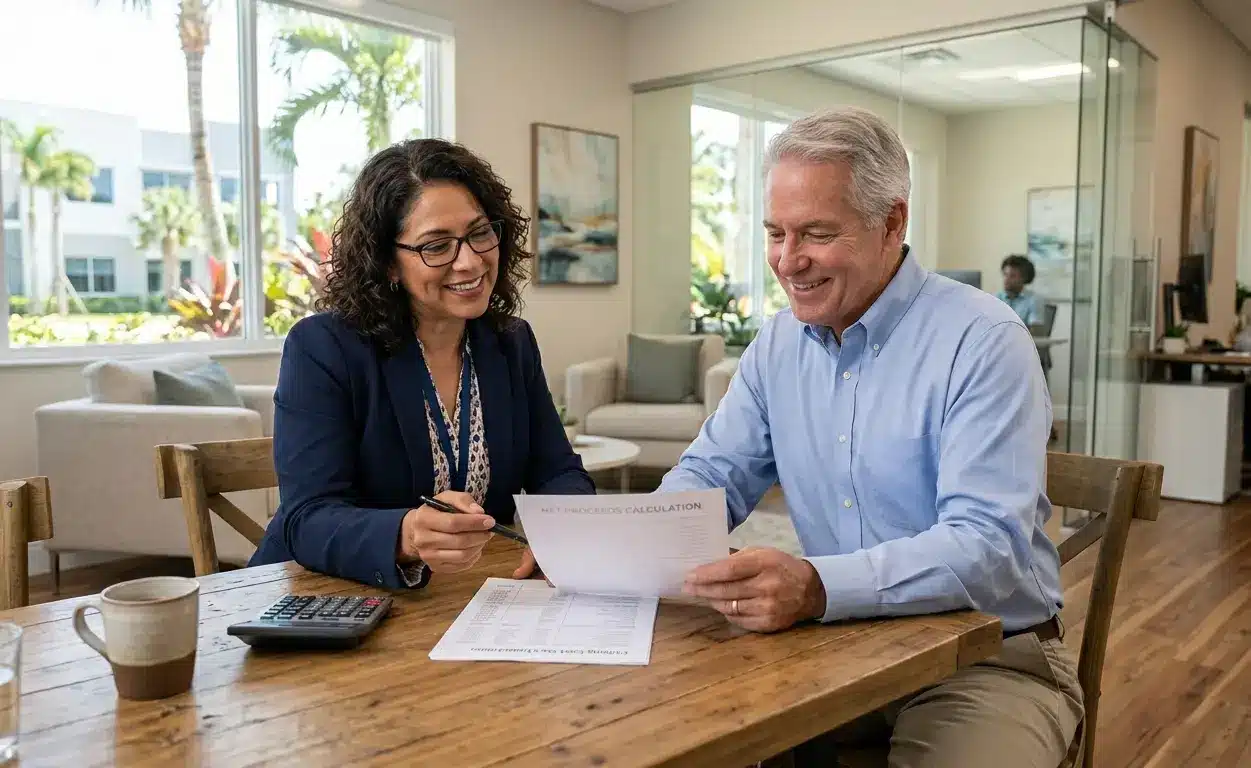
Home selling costs in Florida become clearest when applied to a specific scenario. Consider a seller in Putnam County homes for sale at a $300,000 sale price.
- Real estate commission at 3 percent: $9,000
- Title insurance and closing costs at 2 percent: $6,000
- Documentary stamp taxes: $2,100
- Pre-listing photography and repairs: $2,500
- Carrying costs for 45 days on market: $3,200
- Total estimated selling costs: $22,800
- Estimated net proceeds before mortgage payoff: $277,200
That breakdown illustrates why understanding home selling costs in Florida before you list changes the conversation from “what can I list for” to “what will I actually walk away with.”
Final Thoughts on Home Selling Costs in Florida
Home selling costs in Florida are real, specific, and entirely manageable when you understand them before you list rather than discovering them at closing. Commission, title insurance, documentary stamps, preparation costs, carrying costs, and potential concessions each contribute to the gap between your listing price and your net proceeds. The sellers who walk away most satisfied are the ones who ran these numbers honestly before they listed, priced their home accurately from day one, and worked with a local agent who gave them straight answers rather than optimistic projections. When you’re ready to understand exactly what your specific home would net in today’s Northeast Florida market, request a free home valuation today for an honest, specific number before you make any decisions. For a direct conversation about home selling costs in Florida as they apply to your specific property and situation, contact Kassidy Babcock for guidance that is grounded in the current Northeast Florida market rather than generic national averages.