

Your rent went up again. Third time in two years. You’re frustrated.
Maybe buying makes more sense? Or does it?
The rent vs buy in Florida question confuses everyone. Renters wonder if they should buy. Buyers question their timing. Everyone wants the right answer.
Here’s the truth. No universal right answer exists. It depends. On you. Your situation. Your goals.
Let me break it down clearly.
Renting vs Buying in Florida: Quick Comparison
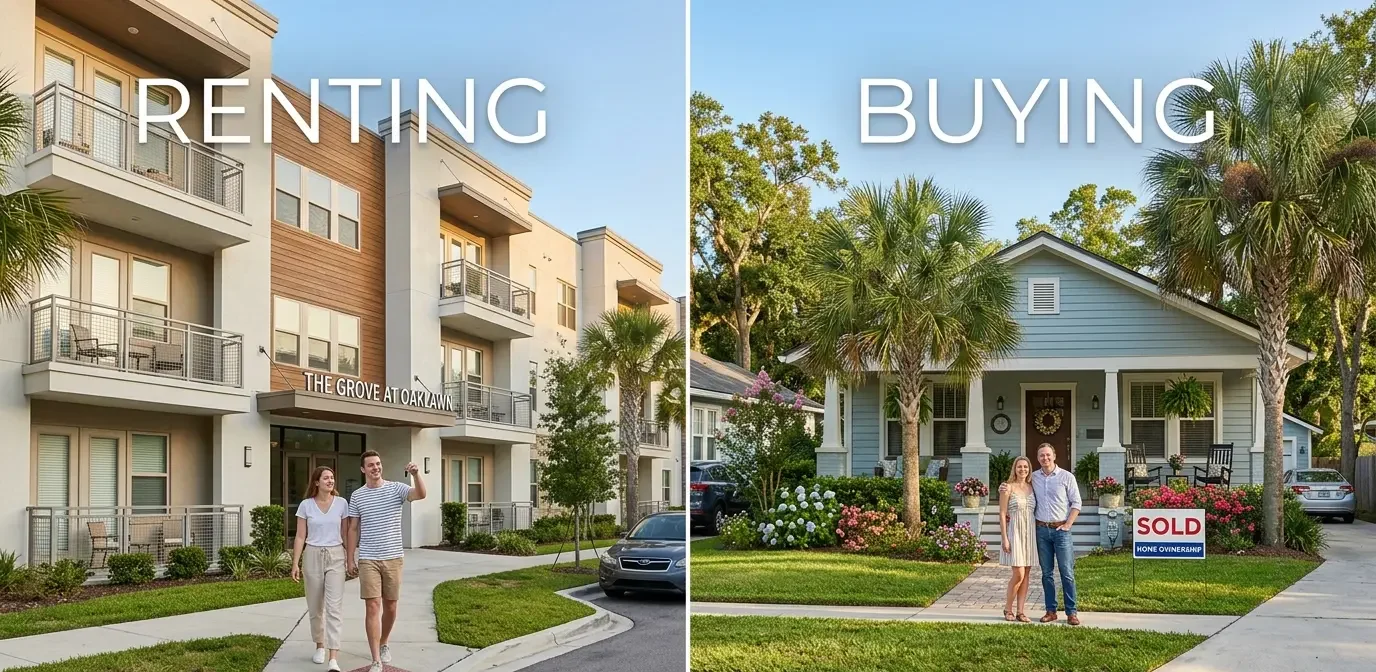
Understanding the basic differences helps. Here’s a simple comparison.
Factor: Monthly Cost
- Renting: Flexible, can increase yearly
- Buying: Fixed mortgage payment (mostly)
Factor: Equity Building
- Renting: No equity, money to landlord
- Buying: Builds equity, wealth over time
Factor: Upfront Costs
- Renting: Security deposit, first/last month
- Buying: Down payment, closing costs, thousands
Factor: Maintenance
- Renting: Landlord handles repairs
- Buying: Owner pays everything
Factor: Flexibility
- Renting: Easy to move, lease ends
- Buying: Harder to relocate, selling takes time
Factor: Stability
- Renting: Lease renewals uncertain, rent increases
- Buying: Own your home, payment stable
Factor: Tax Benefits
- Renting: None
- Buying: Mortgage interest deduction, property tax deduction
These basic differences matter. Understand them. Then dig deeper.
Pros of Renting in Florida
Renting offers real benefits. Not just excuses. Actual advantages.
Flexibility leads the list. Lease ends. You move. Simple. New job? New city? Just go.
Low upfront costs help. Security deposit. First month. Maybe last month. Thousands, not tens of thousands.
No maintenance responsibility. Toilet breaks? Call landlord. Roof leaks? Not your problem. Air conditioner dies? Landlord fixes it.
No property taxes. Landlord pays those. You don’t see the bill.
No insurance requirement. Renters insurance cheap. Optional in many cases.
Predictable monthly costs. Rent stays same during lease. Budget easily.
No market risk. Home values drop? Not your concern. You don’t own it.
Easy budgeting. One payment. Utilities maybe. Done. Simple.
These benefits matter. Especially short-term. Especially uncertain situations.
Cons of Renting in Florida
But renting has real downsides. Serious ones. Consider them carefully.
No equity building. Your money disappears. Landlord gets richer. You get nothing.
Rent increases happen. Lease renews. Rent jumps. Sometimes significantly. Florida rent prices climbing fast.
No stability long-term. Landlord can sell. Decide not to renew. Force you out.
No freedom to modify. Want to paint? Need permission. Install shelves? Ask landlord. It’s not yours.
No investment potential. Home values rise? You don’t benefit. No appreciation gains.
Throwing money away feeling. Decades of rent. Nothing to show. No asset built.
Limited control. Lease terms restrict. Pet policies limit. Guest rules annoy.
No tax benefits. Rent isn’t deductible. No financial advantages.
Rising costs over time. Rent always increases. Never decreases. Long-term expensive.
These downsides add up. Over years. Over decades. Consider seriously.
Pros of Buying a Home in Florida
Home ownership brings significant advantages. Real benefits. Actual wealth building.
Equity builds automatically. Monthly payments build ownership. Eventually you own it outright.
Stable housing costs. Fixed mortgage payment. Same amount monthly. For 15 or 30 years.
Investment opportunity. Florida housing market generally appreciates. Your asset grows value.
Tax benefits help. Mortgage interest deductible. Property taxes deductible. Saves money.
Freedom to modify. Paint anything. Renovate freely. Make it yours.
Rental income potential. Rent rooms. Airbnb occasionally. Extra income possible.
Forced savings. Mortgage payment builds equity. Like automatic savings. Wealth accumulation.
Pride of ownership. It’s yours. Your home. Your castle. Psychological benefits.
Stability for family. Kids grow up. Same house. Same schools. Same neighborhood.
Retirement security. Own home outright. No housing payment. Budget stretches.
These benefits compound. Over time. Over years. Building real wealth.
Cons of Buying in Florida
But buying has real challenges too. Be honest about them.
Huge upfront costs. Down payment. Closing costs. Inspections. Moving. Thousands required.
Property taxes significant. Florida varies by county. But bills add up. Annual expense.
Insurance expensive. Florida homeowners insurance costly. Hurricane risk. Rising premiums.
Maintenance responsibility. Everything breaks. You pay. Roof. AC. Plumbing. All yours.
Less flexibility. Want to move? Sell first. Takes time. Costs money. Complicated process.
Market risk exists. Values drop sometimes. You lose equity. Stuck underwater possible.
Commitment required. Long-term decision. Not easy to reverse. Decades-long obligation.
Hidden costs emerge. HOA fees. Repairs. Landscaping. Always something.
Buyers looking to invest long-term often start by browsing the Florida homes for sale buyers guide to compare pricing and neighborhoods across different regions.
These challenges real. Not deal-breakers necessarily. But honest considerations.
Cost Comparison: Renting vs Buying in Florida
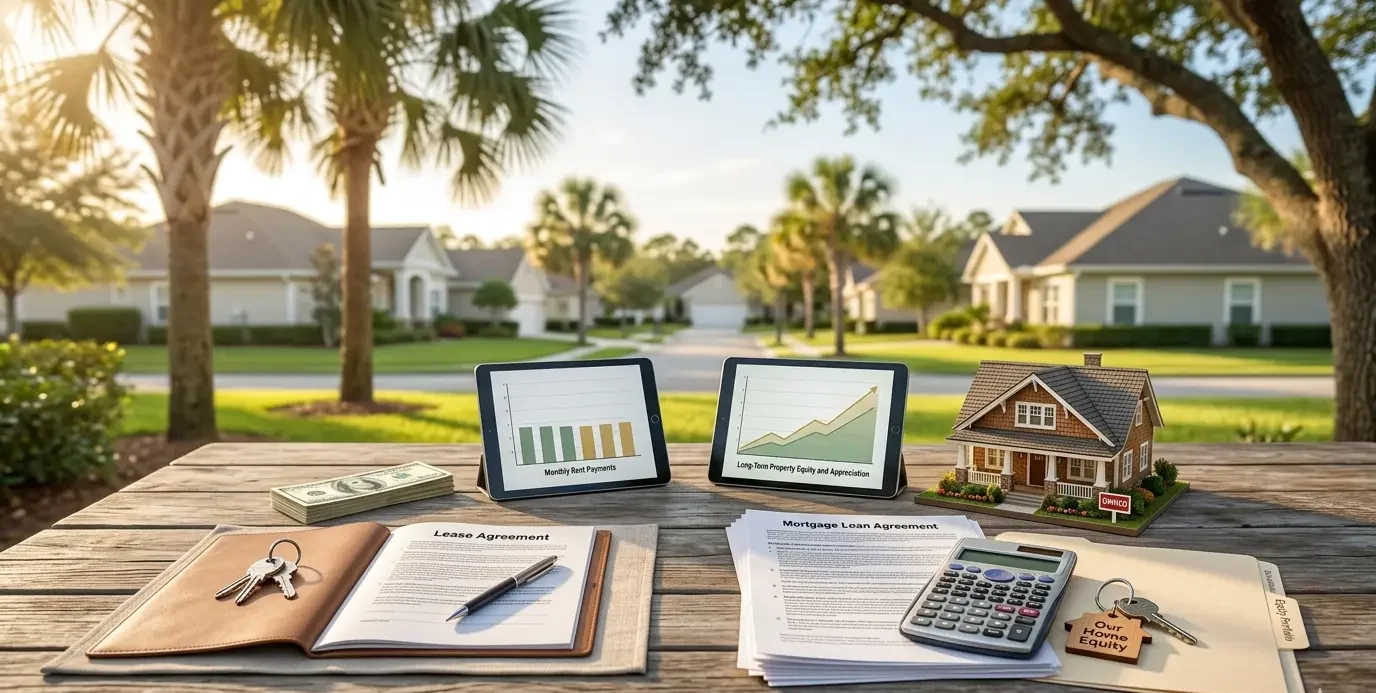
Let’s talk real numbers. Actual costs. Honest comparison.
The average rent in Florida now ranges from $1,800 to $2,500 monthly depending on location.
Buying makes more financial sense after that point. Use this comprehensive Rent vs Buy Calculator to see how your specific numbers stack up over time.
Average mortgage payment Florida maybe $1,500 to $2,500. Depends on price. Down payment. Interest rate.
But mortgage includes principal. Builds equity. Rent builds nothing.
Long-term math matters. Rent 30 years? Maybe $650,000 to $900,000 total. Nothing owned afterward.
Buy with mortgage? Maybe $500,000 to $750,000 total payments. But you own a $300,000+ asset.
Return on investment? Buying wins long-term. Usually. Not always. But generally.
Breaking even happens around 3-5 years. Buying makes more financial sense after that point.
First years renting cheaper. Closing costs. Maintenance. Property taxes. Add up initially.
Costs can vary significantly by location, so reviewing the cost of living in Palatka Florida can help you estimate expenses more accurately for specific areas.
But year 10? Year 20? Buying way ahead financially. Wealth accumulated. Equity built.
This is why the buying vs renting in Florida costs question requires long-term thinking.
When Should You Rent?
Specific situations favor renting. Be honest if yours matches.
Short-term stay planned. Less than 3 years. Closing costs won’t recover. Rent makes sense.
Income unstable. Job uncertain. Commission-based. Unpredictable earnings. Renting safer.
Credit issues exist. Score too low. Can’t qualify yet. Work on credit. Rent meanwhile.
Saving for down payment. Building funds. Not ready yet. Rent while saving.
Testing new area. Not sure about location. Want to explore. Rent first year.
Major life uncertainty. Relationship unstable. Career changing. Big decisions pending. Wait and rent.
Bad market timing. Prices too high. Inventory too low. Waiting for correction. Rent during wait.
Not ready for commitment. Don’t want responsibility. Prefer flexibility. Renting appropriate.
These situations make renting the smart choice. No shame. Just reality.
When Should You Buy?
Other situations strongly favor buying. Consider if yours matches.
Long-term plans solid. Staying 5+ years. Commitment certain. Buying makes sense.
Income stable. Steady job. Reliable paychecks. Can afford payments. Ready financially.
Down payment saved. 3-20% ready. Closing costs covered. Emergency fund exists.
Credit score good. 620+, preferably 700+. Qualify for mortgages. Decent interest rates.
Ready for responsibility. Want to own. Accept maintenance. Embrace commitment.
Building wealth priority. Investment mindset. Long-term thinking. Equity building.
Family stability desired. Kids in schools. Community roots. Settled lifestyle.
Tired of rent increases. Want payment stability. Control own space. Done with landlords.
If you’re considering ownership, exploring current homes for sale in North Florida can give you a clear idea of pricing and opportunities.
These situations make buying the smart choice. Financial sense. Lifestyle fit. Right timing.
Is It Better to Rent or Buy in Florida in 2026?
The Florida housing decision depends on your specific situation. Not general advice. Personal circumstances.
Market conditions 2026? Moderately favorable for buyers. Interest rates stabilizing. Inventory improving. Prices plateauing some areas.
But individual situations vary wildly. What’s right for you? Depends on factors discussed.
This isn’t should I buy a house in Florida question with yes/no answer. It’s complex. Multi-faceted. Personal.
Consider your timeline. Your finances. Your goals. Your lifestyle. Your flexibility needs.
Run the numbers. Compare actual costs. Your rent. Potential mortgage. Total expenses.
Talk to professionals. Realtors. Lenders. Financial advisors. Get personalized guidance.
Before buying, it’s important to understand property value trends using tools like a home valuation in North Florida to make informed decisions.
Visit neighborhoods. Tour homes. Check rent prices. Research comprehensively.
Give it serious thought. Don’t rush. Don’t let emotions decide. Use logic. Use data.
Understanding the Florida Housing Market
The rent vs buy in Florida question connects to market conditions. Current state matters.
Florida housing market strong overall. Population growing. Demand steady. Prices holding.
Rent prices climbing. 5-10% annually many areas. Squeezing renters. Pushing toward ownership.
Home prices varied. Coastal expensive. Inland affordable. North Florida bargains. South Florida premium.
Interest rates matter hugely. Higher rates mean higher payments. Lower rates make buying easier.
Inventory improving slowly. More homes available. Less competition. Better for buyers.
New construction active. Developments expanding. Options increasing. Choices growing.
Different regions different stories. Miami expensive. Tampa moderate. Jacksonville reasonable. Palatka affordable.
This diversity means rent vs buy own Florida depends on location chosen. Research specific areas.
Making Your Decision
Ready to decide on the rent vs buy in Florida question? Here’s how.
Calculate honestly. Real rent. Real potential mortgage. Real total costs. No guessing.
Consider timeline. How long staying? 2 years? Rent. 5+ years? Consider buying.
Assess finances. Down payment ready? Emergency fund exists? Income stable? Honest evaluation.
Check credit. Score above 620? Mortgages possible. Below? Work on it first.
Research areas. Home prices. Rent prices. Property taxes. Insurance costs. Compare completely.
Talk to lender. Get pre-approved. Know real budget. Understand actual options.
Visit properties. See what money buys. Compare to current rental. Value assessment.
Run scenarios. What if you buy? What if you rent? Project 5 years. 10 years. Compare outcomes.
Trust your gut. Logic important. But feelings matter. Comfortable with decision? Proceed. Uncertain? Wait.
Make Your Florida Housing Decision
The rent vs buy in Florida question has no single answer. It’s personal. Individual. Situational.
Both options have merit. Renting works for some. Buying works for others. Timing matters. Circumstances matter.
Be honest with yourself. Your timeline. Your finances. Your goals. Your readiness.
Run real numbers. Compare actual costs. Project long-term. Make informed decisions.
Don’t let pressure decide. Not from family. Not from friends. Not from society. Your choice. Your life.
Take your time. Research thoroughly. Visit areas. Talk to professionals. Understand options completely.
When ready? You’ll know. Confidence builds. Decision becomes clear. Move forward then.
Whether you rent or buy, make the choice that fits your life. Your budget. Your future.
Your perfect Florida housing solution exists. Find it. Own it. Or rent it. Either way, make it work for you.
The right answer? The one that matches your situation. Nothing more. Nothing less.
Good luck with your decision.