

Living in Jacksonville FL gives you something genuinely rare in 2026: a major coastal city where housing still makes financial sense. The median home value sits around $313,627, roughly 15% below the national average, and the overall cost of living index comes in at 94 versus the national benchmark of 100. Jacksonville was ranked the number one Best Big City to Retire by U.S. News and World Report for 2026, and job growth’s projected at nearly 45% over the next decade. That’s why people are seriously exploring living in Jacksonville FL right now. But it’s not without trade-offs, and the city’s sheer size means your experience depends almost entirely on which part of it you land in. This guide covers real costs, Jacksonville FL neighborhoods, jobs, weather, and what the glossy relocation brochures tend to leave out.
What Kind of City Is Jacksonville, Really?
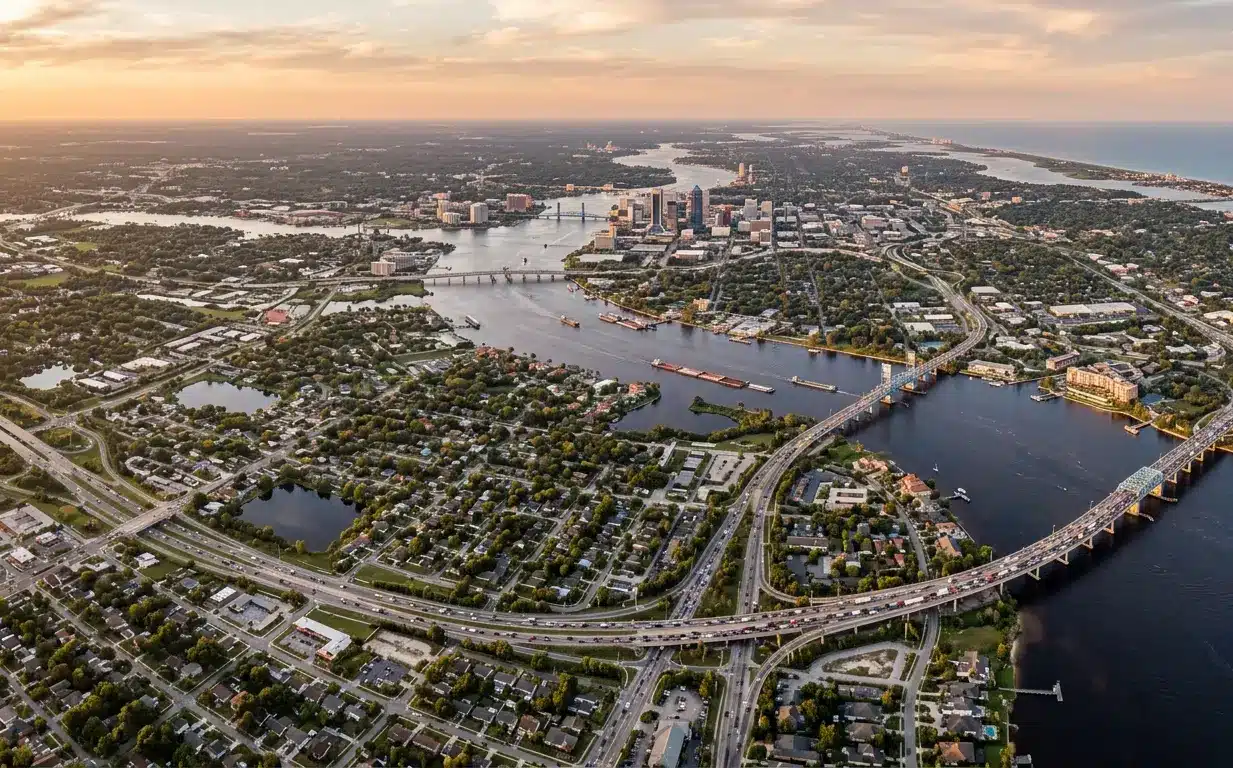
Jacksonville covers over 800 square miles, making it the largest city by landmass in the continental United States. The St. Johns River cuts through the middle of the metro area, dividing it into the Northside, Southside, and Westside, and that river shapes daily life in a very practical way: bridge crossings during rush hour can add 20 to 30 minutes to a commute that looks short on a map. That’s the first thing most people considering living in Jacksonville FL don’t account for when they’re choosing a neighborhood. The city has over 961,000 residents as of 2026, and it functions less like a traditional city with a dominant center and more like a collection of distinct communities connected by highways. Understanding that geography upfront saves a lot of frustration later.
What Does It Actually Cost?
The Jacksonville cost of living sits 8% below the national average, according to data published by the Council for Community and Economic Research in March 2026. Home prices average around $313,627 to $383,678 depending on the neighborhood, while average monthly rent runs approximately $1,493. For context, Miami’s median home price sits above $600,000 and Tampa’s around $380,000, so Jacksonville’s consistently the most affordable of Florida’s major metros. Healthcare costs run 17% below the national average, transportation’s 15% lower, and utilities are around 9% cheaper. The one area where it doesn’t save you money is groceries, running about 4% to 5% above average. Florida charges no state income tax, which meaningfully increases take-home pay for anyone relocating from New York, California, or Illinois. A single adult needs roughly $48,476 per year to live comfortably here, while a family of four needs around $109,641 annually.
Best Areas Jacksonville FL Buyers Should Know

Choosing where to live in Jacksonville FL determines your quality of life more than almost any other single factor. The city’s different regions aren’t just different zip codes. They’re different lifestyles, different price points, and in some cases, completely different commute realities.
Riverside and Avondale
Riverside and Avondale are the city’s most walkable, culturally active neighborhoods. They sit along the St. Johns River near downtown, feature early 20th-century architecture, independent restaurants, art galleries, and local breweries. Young professionals and creatives gravitate here more than anywhere else in Jacksonville. Median home prices run around $505,000. Fishweir Elementary receives strong ratings, and crime rates are lower than the city average, though some streets near the river carry a minor flood risk worth checking before you buy.
Southside and Deerwood
Southside is Jacksonville’s economic engine, home to major corporate offices, the St. Johns Town Center retail district, and the highest concentration of employment in the metro. Deerwood’s a gated golf course community within that area, with a median home value around $395,000. It’s well-suited for buyers who want to minimize commute time, since so many of the city’s largest employers are clustered here. Rental options are plentiful too, making it a smart first base for newcomers who want to learn the city before committing to a purchase. If you’re comparing suburban options just outside the metro, our living in Orange Park FL guide walks through the Clay County alternative in detail.
Mandarin, Northside, and East Arlington
Mandarin offers large lots, mature tree cover, and a quieter suburban pace along the St. Johns River in south Jacksonville. It’s popular with families who want space without leaving the city limits. The Northside tends to offer the most affordable entry prices in the metro, with homes available in the $200,000 to $280,000 range. East Arlington’s safer than 74% of city neighborhoods according to Niche’s 2026 data, with median homes around $244,000, making it one of the best areas Jacksonville FL budget-conscious buyers should seriously consider.
Jacksonville Beach and the Coastal Communities
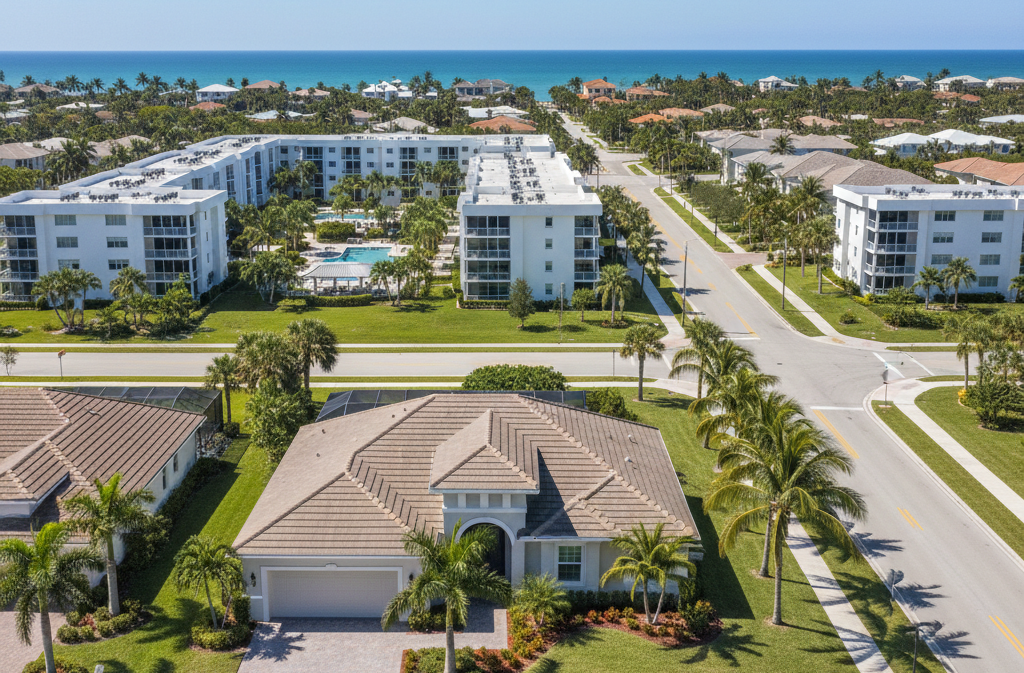
Jacksonville Beach, Atlantic Beach, and Neptune Beach form a coastal corridor northeast of downtown. Median home values at Jacksonville Beach run around $595,000 and they’re rising. Neptune Beach is safer than 84% of city neighborhoods per Niche’s 2026 rankings. These communities draw buyers who want ocean access as a daily reality, not an occasional trip, but you’re paying a meaningful premium over inland options. Coastal living in Jacksonville FL is genuinely appealing, though it comes at a significant price over what you’d pay 20 miles inland.
Jobs, Weather, Traffic, and Schools

Jacksonville’s unemployment rate sits at 4.2% as of January 2026, in line with the national average of 4.4%. The Atlanta Federal Reserve’s March 2026 Jacksonville labor market analysis describes a market that’s stabilized after the post-pandemic surge, with hiring flat across most sectors but not contracting. Healthcare and construction are projected to account for more than 50% of economic growth over the next ten years. Major employers include Baptist Health, Mayo Clinic, Naval Air Station Jacksonville, CSX Corporation, Fidelity National Financial, and Duval County Schools. Entry-level opportunities are plentiful, but experienced professionals in specialized fields sometimes find Jacksonville’s salary scales don’t match larger metros. The no-state-income-tax advantage partially offsets that gap, though it doesn’t close it entirely.
On weather: Jacksonville’s got around 221 sunny days per year and an average annual temperature of about 68 degrees Fahrenheit. Winters are mild, rarely dropping below freezing, with January highs averaging around 66 degrees. But the summer’s a different story. July highs average 92 degrees with consistently high humidity, making outdoor activity genuinely uncomfortable during peak hours from June through September. Hurricane season runs June through November, and while direct major hits are rare, indirect flooding from nearby storms is a real concern when you’re buying. According to RentCafe’s March 2026 Jacksonville cost of living data, flood zone status now ranks among the top factors influencing purchase decisions in Northeast Florida. Checking the FEMA flood zone designation before making an offer isn’t optional, it’s essential.
On traffic: Jacksonville has the third hardest commute in the country according to INRIX data, and residents lost an average of 31 hours to rush hour delays in 2025. Only about 2% of workers use public transit. You’ll need a car, and your neighborhood choice should account for your commute route. Crossing the St. Johns River on I-295 or the Fuller Warren Bridge during morning rush is a daily frustration for anyone living on the Northside or Westside while working in Southside. That bridge dynamic’s the single most underestimated factor in moving to Jacksonville neighborhood selection, and it’s worth a weekday test drive before you commit to any address.
Duval County Public Schools received a B grade from the Florida Department of Education, with several schools improving at least one letter grade. Quality varies significantly by ZIP code though, so don’t rely on the district grade as a blanket reassurance. Families comparing North Florida options should check our living in St. Augustine FL guide to see how St. Johns County schools, consistently ranked among the best in Florida, compare for buyers who can consider that commute.
How Jacksonville Compares to Other North Florida Cities
People exploring this region often weigh Jacksonville against Gainesville and St. Augustine when deciding where to put down roots. Those comparisons are worth making carefully because the lifestyle differences are real. Our living in Gainesville FL guide covers the university-driven economy and smaller-city feel that makes Gainesville appeal to a completely different buyer profile. Jacksonville offers scale and economic diversity that neither city can match, but the trade-off is complexity, traffic, and a learning curve for making sense of 800 square miles of options.
How Klosing With Kassidy Helps North Florida Buyers Make Smarter Moves
Local Knowledge Across the Whole Region
Kassidy Babcock is a licensed Northeast Florida realtor based in Palatka with over 60 closings and more than five years serving buyers across Putnam County and the wider North Florida region. Living in Jacksonville FL is a frequent topic for the buyers she works with, because many clients are weighing the Jacksonville metro against more affordable nearby communities like Palatka, Orange Park, and Green Cove Springs. Kassidy’s on-the-ground perspective means she can help buyers compare real carrying costs, not just list prices, across that entire corridor.
Honest Guidance on Costs Most Buyers Don’t See Coming
Through her work across Northeast Florida, Kassidy’s seen a consistent pattern: buyers thinking about living in Jacksonville FL frequently underestimate insurance costs, HOA fees, and the true monthly cost of ownership in specific zip codes. Her approach is to walk every buyer through a complete monthly picture before they fall in love with a property, so the numbers confirm the decision rather than complicate it after closing.
A Process Built for Out-of-State Relocators
Many of Kassidy’s clients are relocating from out of state on tight timelines. She’s structured her process around that reality, offering detailed market briefings, neighborhood comparisons, and remote consultation options that let buyers get genuinely informed before they set foot in Florida. That methodology’s helped dozens of families land in the right community on the first try rather than needing to move again within two years. If you’re thinking seriously about living in Jacksonville FL or anywhere across North Florida, reach out to Kassidy here and start the conversation.